
Tracer Gas Leak Detection in Parker, CO
Tracer gas detection injects a 95% nitrogen and 5% hydrogen blend into a suspect line, then sniffs the surface above with a hydrogen-specific sensor. The hydrogen molecule is small enough to permeate soil and concrete from a buried leak up to ground level.
Buried-line method.
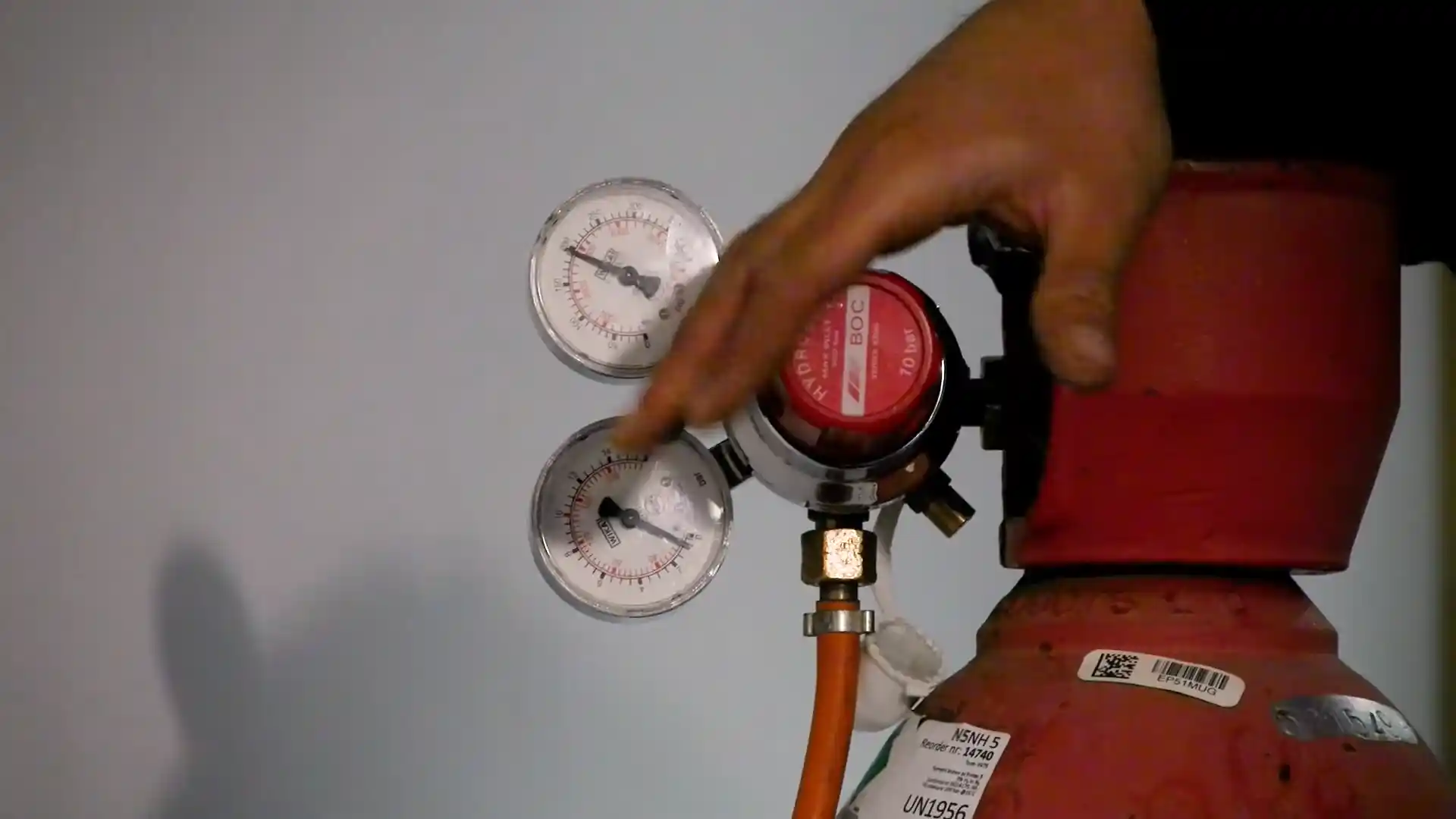
The tracer gas method uses a 95% nitrogen plus 5% hydrogen blend, technically called forming gas. The blend is non-flammable (the 5% hydrogen concentration is below the flammability limit) and inert with respect to plumbing materials. Hydrogen, the smallest molecule in nature, escapes through any opening that water can leak through and migrates up through soil to the surface where a hydrogen sniffer detects it. The detection method targets buried lines specifically.
Tracer gas earns its place on calls where acoustic methods cannot produce a confident location. The gas concentrates at the leak point and produces a sharp surface peak that the sniffer reads directly. It also works on lines that are too small for acoustic methods to produce strong signal (irrigation laterals, small-bore supply branches) and on lines under hardscape that block acoustic transmission. Call (303) 552-3896 for dispatch.
How We Detect Tracer Gas Leak Detection in Parker, CO
Tracer gas calls run a defined sequence. Setup takes longer than acoustic; the actual leak-finding work is faster.
Line isolation drains the suspect line and isolates it from the rest of the system. We need water out of the line so the gas can fill the pipe and reach the leak. For water service lines, this means closing the curb stop and opening the highest fixture to drain. For irrigation laterals, closing the zone valve and opening the lowest sprinkler head drains the line.
Gas injection connects the forming gas cylinder to the isolated line via a fitting at the meter, the irrigation manifold, or any accessible access point. We pressurize the line to 5 to 15 PSI with the gas mix. The gas fills the line and begins migrating out through any leak point into the surrounding soil.
Surface sweep with hydrogen sniffer walks the line path with a sensor calibrated for hydrogen detection. Background atmospheric hydrogen is negligible; any hydrogen signal at the surface corresponds to gas escaping from the line below. The sniffer reads in parts per million and displays signal strength in real time.
Peak location identifies the surface point with the strongest hydrogen reading. The peak is almost always directly above the leak. We mark the surface position and confirm by repeating the sweep over the marked location. Most buried-line leaks locate within 12 inches of the actual leak point using this method.
System restoration after detection vents the gas (which dissipates into atmosphere harmlessly), then refills the line with water. The repair scope (trenched excavation, trenchless replacement, fitting repair) proceeds from the marked leak location.
What tracer gas detects best in Parker, CO
Tracer gas has specific advantages on certain call types and clear limitations on others.
Buried supply lines. Water service lines from curb stop to house are the standard tracer gas application. The line is buried at 4 to 6 feet depth in Douglas County; the gas migrates up reliably through that depth in standard soil conditions. Detection accuracy is within 12 inches of the actual leak in most cases.
Irrigation lateral leaks. Irrigation laterals run at 8 to 14 inches and often produce weak acoustic signal because of low operating pressure. The gas method finds these leaks much faster than acoustic because the soil depth is minimal and any leak point produces clear surface signal.
Inground pool plumbing and hardscape. Pool supply and return lines under decks read well under tracer gas. Driveways, sidewalks, patios, and parking surfaces over buried supply also benefit because the gas migrates through joints and porosity in the hardscape.
Limited on saturated soil. Persistent saturation can absorb hydrogen and reduce surface signal. Late-spring and post-storm calls sometimes need to wait for surface conditions to dry.
Limited on above-ground and drain-side. Tracer gas is buried-line technology. For above-ground equipment, ultrasonic or visual methods work faster. Drains do not hold pressure, so gas injection does not produce sustained surface signal.
The cost comparison versus helium is favorable on most calls. Tracer gas mix is significantly cheaper than helium, sensor equipment is less expensive, and the method covers the bulk of buried-line calls competently. Helium remains the right call on specialty work where tracer gas does not produce a confident location.
Where tracer gas is the right tool in Parker
Yard-leak calls following the standard surface-signs diagnostic often progress to tracer gas as the method of choice for pinpointing buried supply, irrigation, or sewer-suspect lines. Master-planned cohorts (Stonegate, Stroh Ranch, Cottonwood Parker, Canterberry Crossing, Bradbury Ranch, Lincoln Creek, Reata Ridge, Trails at Crowfoot) generate routine tracer gas work on water service line and irrigation mainline failures.
Larger-lot residential and equestrian outskirts (Salisbury Heights, Hidden River, Reata Ridge premium, Franktown, Sedalia, Elizabeth) often have water service runs of 100-plus feet from meter to house. These long runs benefit from tracer gas because acoustic signal can disperse over that distance; the gas method maintains accuracy regardless of run length.
Older cohort (The Pinery 1970s, pre-1990 Downtown Parker) calls on aging copper water service often use tracer gas after acoustic has narrowed the suspect zone. The two methods together usually resolve calls that either method alone cannot.
Bentonite expansive clay zones (Crowfoot Valley, Trails at Crowfoot, Hidden River) create soil-condition variability that affects detection accuracy. Tracer gas methods generally hold up well in bentonite because the gas migration paths are through soil porosity rather than through specific drainage zones; the gas finds whatever path is available.
Front Range freeze-cycle damage on irrigation and service lines produces spring call patterns where tracer gas is the diagnostic of choice. Acoustic sometimes struggles on freeze-damaged lines with multiple small splits; tracer gas highlights the largest leak first.
Tracer gas detection $300 to $600.
Standard buried-line $300 to $450. Larger property or complex multi-line work $450 to $600. Detection cost typically folds into the repair when we proceed on the same visit.
Buried-line leak that acoustic missed?
Tracer gas method finds leaks under hardscape and through challenging soils.
☎ (303) 552-3896Tracer gas detection questions Parker calls in with
Is the hydrogen-nitrogen gas mix safe?
Yes. The 5% hydrogen concentration is well below the lower flammability limit of 4.1% pure hydrogen mixed with regular atmospheric oxygen; even when the gas vents to atmosphere, it dilutes below any combustion risk almost immediately. Nitrogen is the dominant component (95%) and is the same gas that makes up 78% of normal atmosphere. The mix is non-toxic, non-corrosive, and leaves no residue in plumbing.
How is tracer gas different from helium detection?
Different chemistry. Helium uses 100% helium gas and a mass-spectrometer sniffer; the equipment is more expensive but more sensitive. Tracer gas uses a 95/5 nitrogen-hydrogen blend and a hydrogen sniffer; equipment is cheaper but sensitivity is enough for most buried-line work. Tracer gas covers routine buried-line calls; helium covers specialty work where higher sensitivity is needed.
Will tracer gas work if my yard is muddy from recent rain?
Sometimes. Persistent saturation in the top 6 to 12 inches of soil absorbs hydrogen and reduces surface signal. Light moisture is fine; severely saturated soil produces weak readings. On muddy-yard calls we may need to wait 24 to 48 hours for surface conditions to dry slightly before running the method. Heavier soils (clay-rich Parker yards) hold moisture longer than sandy soils, so the wait can be longer in some neighborhoods.
Related Leak Services in Parker, CO
Parker, CO & Douglas County Coverage
Tracer gas methods apply across all Parker neighborhoods on buried-line calls.