
Electronic Leak Detection in Parker, CO
Electronic detection pushes a known electrical signal through a buried line and tracks the signal from above with a receiver. The result is a precise line path map plus the depth at any point. Different from acoustic because it works by conduction rather than sound.
Path-and-depth mapping.
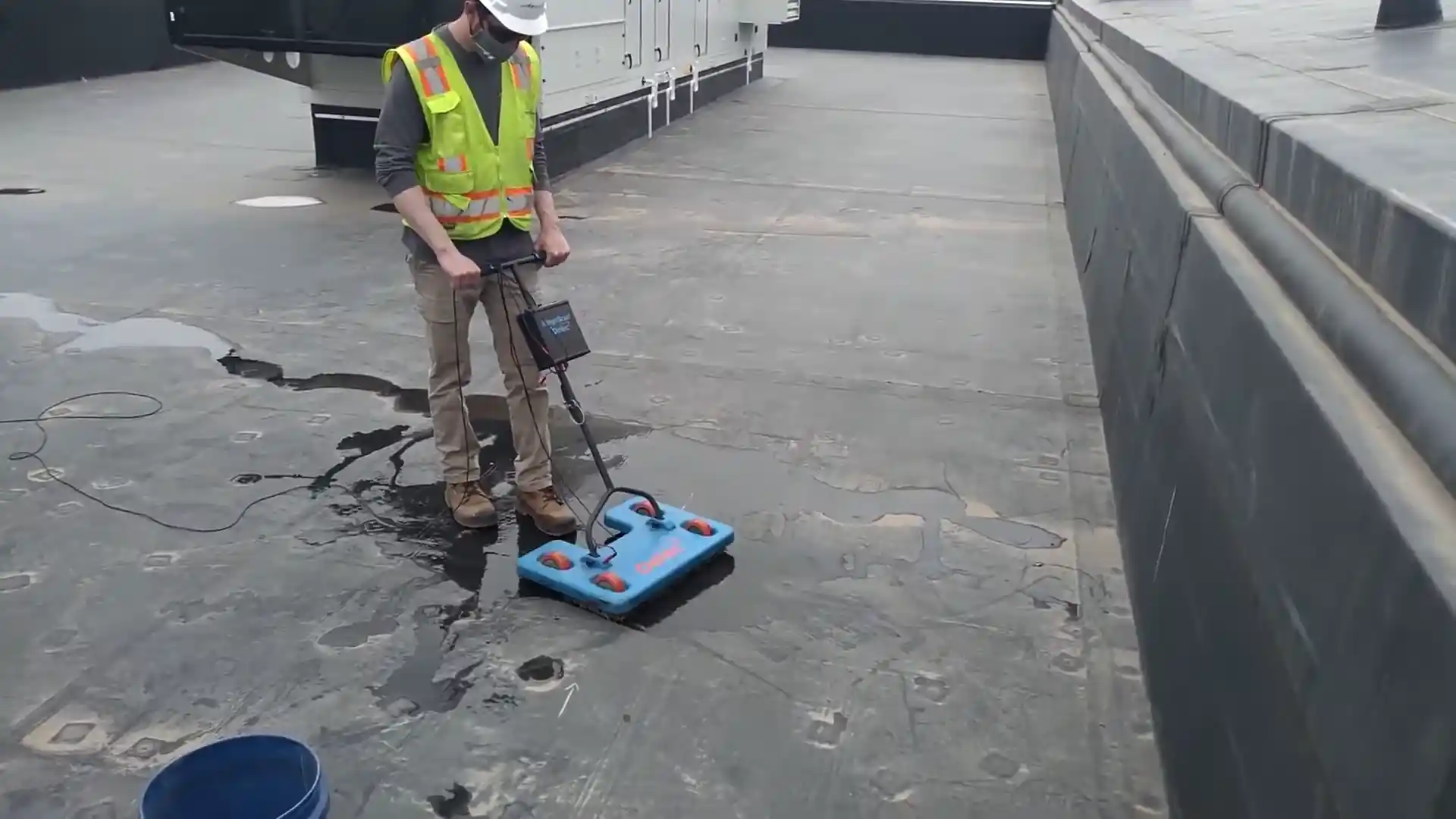
Electronic line tracing uses a transmitter clamped to an accessible point on a metal line (water service, gas service, or any conductive pipe) and a receiver carried above ground along the line path. The transmitter pushes a low-voltage signal at a specific frequency into the pipe; the receiver reads that frequency and indicates the line path precisely. The same gear measures depth at any point along the line.
On non-conductive lines (PVC, PEX, sewer), the technique adapts by inserting a flexible sonde transmitter on a push cable into the pipe. The sonde broadcasts a signal that the receiver picks up. This combined approach lets us trace virtually any buried line whether metallic or not. The method does not directly find the leak; it locates the line precisely so other methods (acoustic, tracer gas) can be applied along the confirmed path. Call (303) 552-3896 for dispatch.
How We Detect Electronic Leak Detection in Parker, CO
Electronic methods on a Parker call follow a typical sequence depending on line type.
Transmitter connection on conductive lines clamps onto an accessible metal point: a hose bib, an exposed meter connection, an irrigation valve, or the service line at the basement entry. The transmitter injects a frequency-specific signal into the conductor. Setup takes 5 to 10 minutes.
Receiver walk on the line path follows the suspected line route with a receiver tuned to the transmitter frequency. The receiver beeps and displays signal strength relative to the underground line position. Walking until the signal peaks identifies a point directly above the line; moving left and right confirms the line position within a few inches.
Depth measurement at any point uses the receiver in depth mode. The receiver calculates depth from the angle and intensity of the signal field. Accuracy is typically within 2 to 4 inches in normal soils. Depth matters for excavation planning and for understanding what other utilities might be in the same vertical zone.
Sonde insertion on non-conductive lines uses a flexible push rod with a transmitter at the tip. We push the sonde through a cleanout, an exposed open end, or a fixture connection. As the sonde travels through the line, we track it from the surface with the receiver. The sonde method works on PVC supply, PEX, sewer laterals, drain lines, and any conduit large enough to accept the push cable (typically 1-inch diameter or larger).
Fault location on certain failure types where the line itself has lost signal continuity (broken conductor, severed connection) uses a specialized fault receiver. The fault receiver locates where the conductive signal stops, which sometimes corresponds to the failure point itself. Used most often on irrigation valve solenoid failures and on damaged direct-burial wire.
What electronic methods add to leak detection in Parker, CO
Electronic tracing is rarely the leak-finding method by itself. It is the foundation that makes other methods more effective.
Line path certainty. Most Parker yards have water service, irrigation mainline, sewer lateral, gas service, and electric direct-burial all in the same general area. Marking the leaking line's exact path before any acoustic, tracer gas, or excavation work eliminates wasted effort on the wrong utility.
Excavation precision. Knowing the line is at 5 feet 7 inches depth at a specific surface point means the excavator opens a 3-foot trench directly to the line rather than searching with a wider opening. Hardscape restoration after a precision excavation is far less expensive than after a wide search dig.
Sewer lateral location. Sewer laterals route from house to city main, often through landscaping that owners want preserved. Electronic tracing maps the lateral path before any work begins, allowing the homeowner to make informed decisions about which trees, plantings, or hardscape are affected by the repair scope.
Utility coordination. Multi-service Parker properties (gas, water, irrigation, sewer, electric, communications) benefit from a complete electronic locating run before any leak repair excavation. We coordinate with 811 utility marking services to combine the public-utility marks with our private-line tracing for full coverage.
Cost-benefit on small jobs. Electronic tracing is fast (typically 20 to 60 minutes per line) and adds modest cost ($150 to $300 per service traced). The cost is usually justified for any excavation-required repair because mis-located digs are expensive to recover from.
Electronic tracing combined with acoustic listening or tracer gas sniffing is the standard workflow on buried-line leak calls. The electronic work happens first, then the leak-finding method runs along the marked line.
Where electronic tracing matters in Parker
Newer master-planned cohorts use PEX or PVC for water service and PVC for sewer laterals. The cohort includes Bradbury Ranch, Lincoln Creek, Reata Ridge, Hidden River, Parker Vista, Black Feather, Trails at Crowfoot, Newlin Gulch, Hilltop Parker, and Salisbury Heights. Both materials are non-conductive, which means sonde insertion is the standard tracing method. Most yards in these cohorts also have buried irrigation mainline, dog-fence direct-burial wire, and other utilities that benefit from systematic tracing before excavation.
Older cohorts (The Pinery 1970s, pre-1990 Downtown Parker) have copper water service that allows direct transmitter clamping. Cast-iron sewer laterals in these neighborhoods are conductive too. Tracing on these properties is faster and more straightforward than the newer-build situations.
Equestrian outskirts (Franktown, Sedalia, Elizabeth) often have private wells with longer service runs and complex irrigation across multi-acre lots. Tracing is essential before any leak work because runs are too long to dig blind. Pre-construction utility locating uses the same equipment to mark existing utilities before renovations.
Electronic tracing $150 to $400.
Single-line tracing $150 to $300 depending on line length and complexity. Multi-line property survey $300 to $400 including water service, sewer lateral, irrigation mainline, and any other utilities accessible. Tracing cost typically folds into the leak detection visit cost on standard calls.
Need precise line location before excavation?
Electronic tracing maps path and depth. Other methods then locate the leak along that mapped line.
☎ (303) 552-3896Electronic detection questions Parker calls in with
How is electronic leak detection different from acoustic?
Electronic methods locate the line; acoustic methods locate the leak along the line. Electronic tracing maps where the buried pipe runs and how deep, but does not directly find a leak. Acoustic listening then walks the confirmed line path listening for the leak's sound signature. The two methods work together on most buried-line calls: electronic first to confirm where the line is, acoustic next to find where the leak is on that line.
Will 811 utility marking already cover what you need?
Partially. 811 marks publicly-owned utilities (gas, electric, communications, sometimes water) at the service entry, but does not mark private lines past the meter. Irrigation mainlines, sewer laterals, private well lines, swimming pool plumbing, and many other property utilities are not in the 811 system. Our tracing covers these private-side lines that 811 does not. Both should be done before any significant excavation.
Can you trace a PVC pipe?
Yes, using a sonde. PVC and PEX are non-conductive so a transmitter clamp will not push signal through them, but a flexible sonde transmitter pushed through the pipe broadcasts a trackable signal from inside. The sonde method works on any pipe big enough to accept the push cable, typically 1-inch diameter and up. Standard application on newer Parker construction where most service piping is non-metallic.
Related Leak Services in Parker, CO
Parker, CO & Douglas County Coverage
Electronic tracing applies on virtually every Parker property with buried utilities.