
Slab Leak Detection & Repair in Parker, CO
Acoustic and thermal locating through the concrete first, then a targeted access cut at the confirmed leak point. We cover all 18 Parker neighborhoods plus the equestrian outskirts of Franktown, Sedalia, and Elizabeth.
Real Colorado plumber answers.
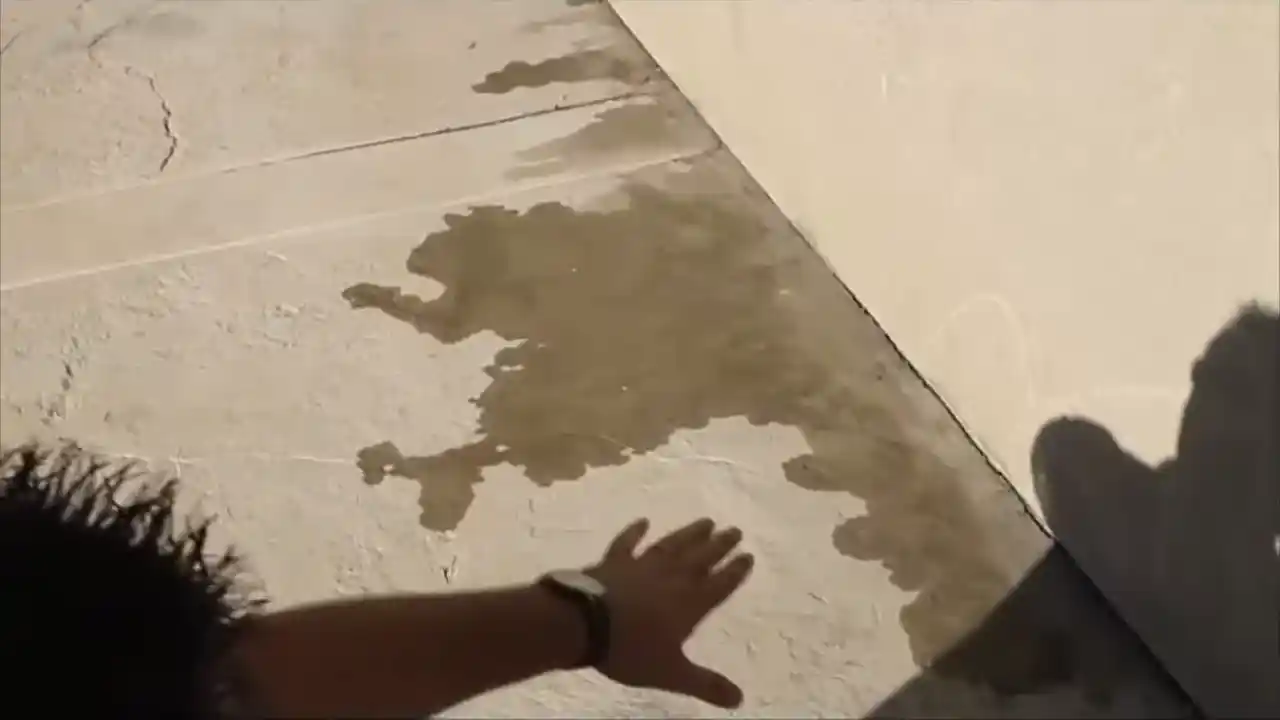
Parker's master-planned communities built between 1990 and 2015 sit on concrete slab foundations with copper or PEX supply lines embedded in or below the slab. Stonegate, Stroh Ranch, Idyllwilde, Canterberry Crossing, and the early Crowfoot Valley phases all share that construction pattern. When a supply line under the slab fails, the water has nowhere to go except into the soil under your foundation, then up through the concrete as a warm spot or a hairline of moisture.
A slab leak in Parker is almost always a supply-side failure rather than a drain issue. The pressurized line keeps releasing water 24 hours a day until the line is isolated. Average water loss runs 50 to 250 gallons per day for a small pinhole, which shows up on the next PWSD bill as a 20 to 40 percent jump with no usage change. Bigger leaks show up as audible hissing, warm tile or warm carpet, or visible swelling where the slab meets baseboard.
How We Detect Slab Leak Detection and Repair in Parker, CO
Three tools run in sequence on most Parker slab calls. The order matters because each tool narrows the search area before the next one fires.
Acoustic listening goes first. A ground microphone pressed against the slab picks up the pressurized hiss at the leak point through three to six inches of concrete. In a quiet house with the water on and all fixtures off, an experienced technician can locate the leak to within 18 inches in 20 to 40 minutes. Master-planned homes in Idyllwilde and Stonegate built on post-tensioned slabs need the listening pass adjusted for the tendons; we map them first off the original plans where available.
Thermal imaging follows on hot-water-line leaks. Water escaping under the slab raises the surface temperature directly above the leak by 2 to 6 degrees Fahrenheit. The thermal camera reads that signature through tile, vinyl plank, hardwood, and most carpet. For cold-water-line leaks the temperature differential is smaller but still readable in winter when the slab itself sits at 55 to 60 degrees and the leak is at 50 to 55.
Tracer-gas detection runs last when acoustic plus thermal cannot resolve the leak point to better than 18 inches. A hydrogen-nitrogen mix is pumped into the isolated line. The gas escapes at the leak point and rises through the slab to a surface sniffer, which pinpoints the location to within an inch. Tracer gas is non-toxic, lighter than air, and clears within hours.
Three repair options. The leak picks one. in Parker, CO
Slab leak repair in Parker breaks down into three approaches. The choice depends on the leak location, the pipe material, the age of the supply system, and what the rest of the line looks like.
Spot repair means cutting a small access in the flooring, breaking out a 10-by-10 inch concrete section, repairing or replacing the damaged pipe segment, backfilling, and patching the floor. Total scope: $1,500 to $3,500 in most Parker homes including restoration. Spot repair makes sense for an isolated leak in a young supply system, typically PEX or copper under 25 years old.
Reroute abandons the failed underslab line and runs a new supply through the attic, wall cavities, or perimeter. The leaking pipe is capped at both ends and left in place. New line runs through accessible spaces to the affected fixture. Total scope: $1,200 to $2,500. Reroute is the standard call for The Pinery's 1970s copper, where one pinhole signals others are coming.
Whole-house repipe abandons all underslab supply and replaces it with PEX through the walls and ceilings. Total scope: $5,500 to $12,000 depending on home size. Repipe makes sense when two or more pinhole leaks have appeared in 12 to 18 months, which is common in 1990s master-planned cohorts now hitting the 30-year copper-fatigue window.
Where slab leaks hit hardest in Parker
Parker's slab leak load sits primarily in the 1990s and early-2000s master-planned cohorts. Stonegate, Stroh Ranch, Idyllwilde, Canterberry Crossing, and Cottonwood Parker were built with copper supply that is now 25 to 35 years old. That sits squarely in the pinhole-failure window for very hard water, which Parker Water and Sanitation District delivers at 9.2 grains per gallon.
The mid-2000s and 2010s cohorts including Bradbury Ranch, Lincoln Creek, Reata Ridge, and Trails at Crowfoot mostly transitioned to PEX supply with copper stub-outs to fixtures. PEX is more durable against hard-water pinhole failure, but the copper stub connections and the fittings at manifolds still fail at expected rates. Slab calls in these cohorts trend toward fitting failures rather than mid-pipe pinholes.
The Pinery and Pine Lane Estates run on private wells with hardness sometimes past 17 grains per gallon. Slab leaks in well-served homes can appear earlier than the PWSD-served average because the additional mineral content accelerates copper wear. We check water source first on every slab call into these neighborhoods.
Front Range freeze risk is real but rarely the slab leak cause directly. January lows of 13 to 22 degrees can freeze exposed pipe and crawlspace lines, but underslab supply stays at 50-plus degrees year-round and does not freeze in normal construction. For a slab leak in any of the master-planned cohorts, call (303) 552-3896 for same-day acoustic and thermal locating.
Slab leak detection $300 to $600. Repair $1,200 to $12,000.
Detection runs $300 to $600 with a written report. Repair pricing follows the path: spot repair $1,500 to $3,500, reroute $1,200 to $2,500, whole-house repipe $5,500 to $12,000. Insurance frequently covers the water damage; the repair itself depends on policy language.
Warm spot on your floor right now?
Call dispatch directly. Slab leak detection runs same-day in Parker.
☎ (303) 552-3896Slab leak questions Parker calls in with
How do I know if I have a slab leak and not just a fixture leak?
Three signs separate a slab leak from a fixture leak. First, the water meter spins with every fixture in the house turned off and the irrigation system off. Second, there is a warm spot or wet area on the floor that does not match any fixture above. Third, the water bill jumped 20 percent or more with no usage change. If two of those three are present, the leak is almost certainly in the supply lines, and slab-embedded lines are the most common location.
Will you have to jackhammer my floor?
Only at the confirmed leak point, and only if the repair path is spot repair through the slab. Detection runs entirely non-invasive through acoustic, thermal, and tracer-gas tools. If we recommend reroute, no concrete cutting happens at all. If we recommend spot repair, the access cut is typically 10 by 10 inches at the leak location, not a wider exploratory excavation.
My home is in Stonegate. Should I expect more slab leaks if I get one?
Statistically, yes. Stonegate phases built between 1992 and 2001 used copper supply that is now in the 25-to-33-year pinhole-failure window. One confirmed leak in a 1990s Stonegate home raises the probability of a second pinhole within 18 months. If the first repair was a spot repair and a second leak appears, the call is usually to switch to whole-house repipe instead of another spot.
Related Leak Services in Parker, CO
Foundation Leak
Active leak vs settlement crack. Bentonite-stressed areas first.
Pinhole Leak
Same root cause as most slab leaks. Often signals a repipe candidate.
Water Heater Leak
Tank corrosion ties to the same PWSD hardness profile.
Water Meter & High-Bill Leak Detection
Meter-based diagnosis before we dispatch.
Parker, CO & Douglas County Coverage
Slab leak calls cluster in master-planned cohorts. The Pinery's pre-slab 1970s homes are mostly crawlspace or basement construction.