
Pinhole Leak Detection & Repair in Parker, CO
Pinhole leak detection through finished drywall using acoustic listening and thermal imaging. We work all Parker copper-era cohorts including The Pinery, Stonegate, Stroh Ranch, and Idyllwilde.
Repair vs repipe consult on the call.
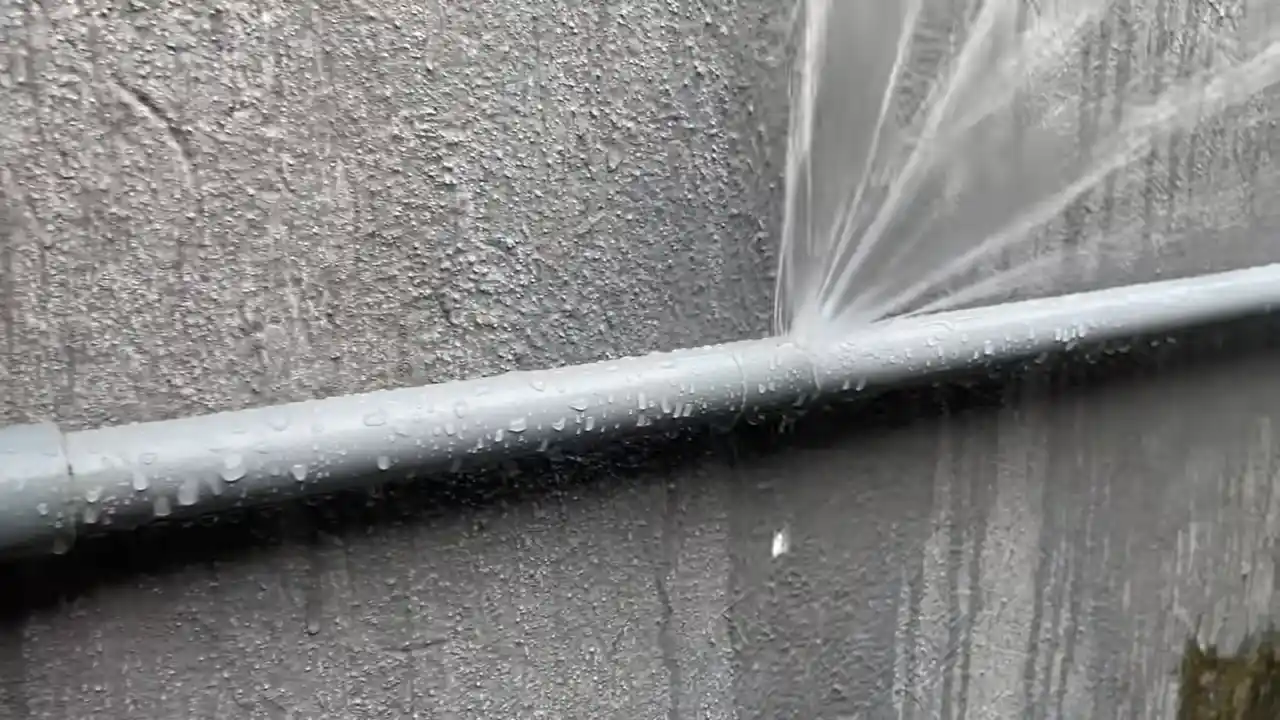
Acoustic listening through finished drywall catches the pressurized hiss of an active pinhole leak in copper supply lines within minutes. Thermal imaging then confirms the temperature differential where water is escaping. Those two tools locate Parker pinhole leaks without opening a single wall section. Tracer-gas backs them up when the leak is small enough that acoustic and thermal come back ambiguous.
A pinhole is exactly what it sounds like. A spot on the copper supply wall thins from years of mildly aggressive water chemistry and turbulence at fittings until it perforates. The hole is typically smaller than a pencil tip. By the time a homeowner sees ceiling staining or smells musty drywall, the pinhole has usually been active for weeks.
How We Detect Pinhole Leak Detection and Repair in Parker, CO
Pinhole detection in Parker breaks down into three method tiers. We start with the fastest, cheapest tool and escalate as needed.
Acoustic listening is the first pass. Pressurized supply lines under continuous house pressure (typically 50 to 70 PSI in Parker) push water through any pinhole at audible velocity. A contact microphone pressed against drywall, tile, or wood walls picks up that signature through the wall finish. Most active pinholes get located to within 8 inches of the actual leak in 15 to 25 minutes of listening with the water on and the house otherwise quiet.
Thermal imaging confirms hot-water-line pinholes. A pinhole on the hot side releases 130-degree water into framing or insulation, which raises the local surface temperature by 4 to 10 degrees Fahrenheit. The thermal camera reads that signature through paint, wallpaper, and most ceiling textures. Cold-side pinholes give a smaller thermal signature in winter but still readable when the house interior is warm and the supply is around 55 degrees.
Tracer gas runs when acoustic returns ambiguous and the leak is too small for thermal to resolve. The line is isolated, drained partially, and a hydrogen-nitrogen mix pumped in. The gas escapes through the pinhole and rises through framing to a sniffer at the wall surface. Slowest method but locates leaks the other two miss.
The Pinery's 1970s copper sometimes shows multiple pinholes in close sequence. When acoustic finds one and the surrounding 10-foot pipe section is the same age and material, the question shifts. The right question is how many more pinholes are likely in 12 months. We survey the remaining accessible copper to inform repair-vs-repipe decisions. Call (303) 552-3896 for the full survey on a Pinery or 1990s home.
Spot repair, section replacement, or full repipe in Parker, CO
Pinhole repair in Parker breaks into three scope levels. The right choice depends on the home's copper age, the number of pinholes appearing, and the cost differential.
Spot repair opens drywall at the confirmed leak point (typically a 12-by-12 inch access), cuts out the failed copper section, and sweats in a replacement section with couplings. Drywall patch goes back same day or next visit. Cost $400 to $1,000 per leak point including drywall and texture. Reasonable for a one-off pinhole in young copper.
Section replacement covers a 6 to 20 foot run when one pinhole has appeared and the surrounding pipe is at end-of-life age. The line gets opened at both ends, the old run pulled, and new copper or PEX run in its place. Cost $800 to $2,400 per section.
Whole-house repipe abandons the existing supply system and runs new PEX through walls, ceilings, and crawlspaces to every fixture. Total cost $5,500 to $12,000 depending on home size and fixture count. Whole-house repipe is the standard call for The Pinery 1970s copper at this point in its life, and increasingly common in the early-1990s Stonegate phases.
Insurance coverage on pinhole repairs depends heavily on whether the claim is filed as 'sudden and accidental' water damage or as a maintenance item. A first pinhole with associated water damage to flooring or drywall is usually covered for the damage but not the pipe repair. Multiple pinholes filed as a pattern (more than two in 12 months) often get classified as maintenance and denied for both damage and repair.
Three Parker cohorts in three different pinhole windows
The Pinery is Parker's oldest housing cohort, developed in the 1970s as the original master-planned community around The Pinery Country Club. Copper supply lines installed then are now 45 to 55 years old, well past the typical pinhole-failure window for very hard water. Every Pinery home built in that era is a candidate for active or imminent pinholes; the question is when.
The 1990s and early-2000s phases of Stonegate, Stroh Ranch, Idyllwilde, Canterberry Crossing, and Cottonwood Parker make up Parker's second copper-era cohort. Those homes sit at the 25-to-35-year mark, which is the mid-pinhole-failure window. Parker Water and Sanitation District's 9.2-grain hardness is the primary chemistry driver here. The Pinery and Pine Lane Estates sometimes deliver hardness past 17 grains per gallon, which can put pinhole-failure timing 5 to 10 years earlier than the PWSD-served average.
Pinhole detection $250 to $500. Repair $400 to $12,000.
Detection $250 to $500 covers acoustic, thermal, and tracer-gas plus written report. Repair paths: spot $400 to $1,000, section replacement $800 to $2,400, whole-house repipe $5,500 to $12,000. The recommendation depends on copper age and pinhole count.
Hearing a hiss inside the wall?
Active pinhole leaks add ceiling and framing damage daily until isolated. Call dispatch directly.
☎ (303) 552-3896Pinhole leak questions Parker calls in with
What causes pinhole leaks in copper supply lines?
The dominant cause in Parker is long-term electrochemical wear from very hard water against copper. Parker Water and Sanitation District delivers water at 9.2 grains per gallon, which is hard enough to keep mild aggressive chemistry working on the copper wall over decades. Turbulence at fittings, high water pressure (anything over 80 PSI), and trapped grit from older galvanized iron sections upstream all accelerate the process. The result is a pin-sized perforation, usually on a horizontal run, after 25 to 50 years of service.
If I have one pinhole, will I get more?
Probably, if the home is past the 25-year mark on its original copper supply. The chemistry that caused the first pinhole is identical across the rest of the system. Pinhole counts of two within 18 months and three within five years are common in Parker's 1990s master-planned cohort and very common in the 1970s Pinery cohort. At the point of a second confirmed pinhole, the cost-comparison usually swings toward whole-house repipe over more spot repairs.
Will detection damage my walls?
No. Acoustic listening and thermal imaging are both surface-contact and non-contact tools. Tracer gas requires a small entry point at an existing valve or hose bib but does not need wall access. We locate the leak first, then open drywall only at the confirmed leak point for the repair work. The locating phase leaves your walls untouched.
How much does whole-house repipe cost in Parker?
Most Parker repipes run $5,500 to $12,000. The variance comes from home size, fixture count, slab vs frame construction, and whether the existing drywall textures need matching. A 2,200-square-foot Stonegate two-story with standard fixtures typically lands at $7,000 to $9,000. Pinery ranch-style homes sometimes come in lower if access is straightforward. Estimates get firmed up after a walk-through.
Related Leak Services in Parker, CO
Parker, CO & Douglas County Coverage
Pinhole concentration follows copper era. The Pinery 1970s leads, 1990s master-planned phases close behind, mid-2000s PEX cohorts lag.