
Sonar Leak Detection in Parker, CO
Sonar detection sends an active sound pulse down a water-filled pipe and measures the echo that bounces back. The echo timing reveals breaks, blockages, and structural changes along the line. Different from passive acoustic listening because sonar generates its own signal.
Water-filled line work.
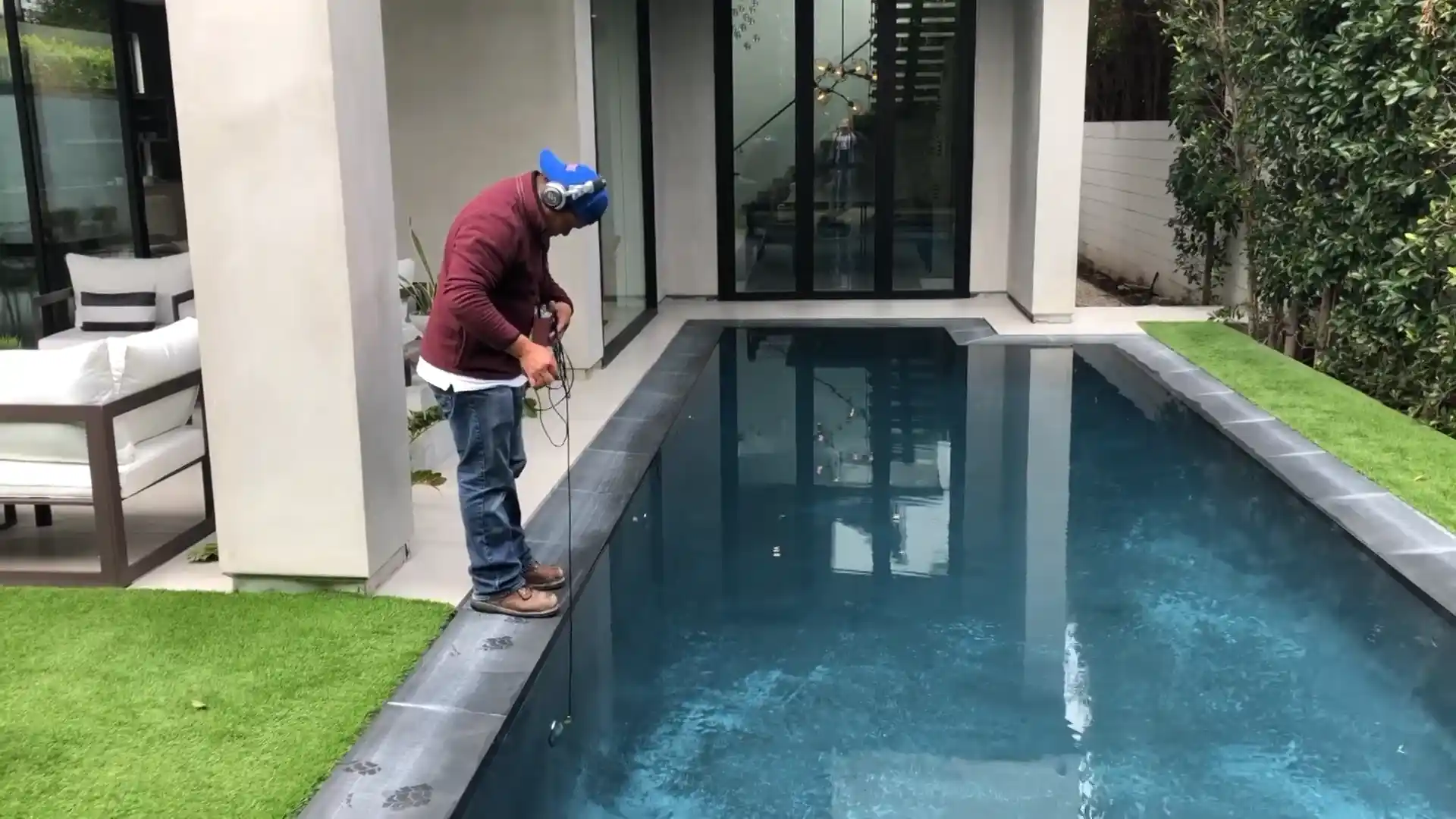
Sonar leak detection works on a completely different principle than the listening methods. Instead of waiting to hear sound from a leak, sonar generates its own acoustic pulse, sends it down a water-filled pipe, and measures the time and character of the echo that returns. A clean pipe returns a predictable echo. A break, a blockage, a void behind the pipe wall, or a structural defect changes the echo signature and reveals its location along the line.
The method applies to water-filled lines specifically: sewer mains, large-diameter laterals, water transmission lines, and similar pipes where a sonar transducer can travel through standing water. It excels at characterizing the condition of a full line length rather than just finding one leak point. Sonar is more common on commercial and municipal-scale work than on residential calls, but applies to larger residential sewer and water service lines too. Call (303) 552-3896 for dispatch.
How We Detect Sonar Leak Detection in Parker, CO
Sonar work runs a defined sequence built around the transducer deployment and echo analysis.
Line access and preparation identifies an access point where the sonar transducer can enter the water-filled line. Sewer cleanouts, manholes, and large-diameter pipe access points all work. The line needs standing water for the sonar pulse to travel; dry lines need different methods entirely.
Transducer deployment floats or crawls the sonar head down the line. Some systems use a floating raft that carries the transducer; others use a crawler. The transducer sends pulses continuously as it travels, building a profile of the line's interior as it goes.
Echo profiling records the return signal at each position along the line. The software builds a cross-sectional profile showing the pipe interior shape, any sediment or debris accumulation, structural deformations, and points where the echo indicates a break or void. The profile reads like a continuous map of the line condition.
Anomaly characterization interprets the echo profile for actionable findings. Sediment buildup shows as reduced interior diameter. Cracks and breaks show as echo discontinuities. Voids behind the pipe wall (often indicating soil loss around a leaking joint) show as echo extensions beyond the pipe wall. Each anomaly type has a recognizable signature.
Position correlation ties each anomaly to a surface position using the transducer's distance tracking combined with electronic line tracing. The result is a marked surface location for each significant finding, ready for excavation or repair planning.
What sonar adds and where it fits in Parker, CO
Sonar occupies a specific niche in the detection toolkit. Knowing when it applies saves time over methods that do not fit the call.
Large-diameter sewer and water main assessment. Commercial properties, HOA-managed common infrastructure, and larger residential sewer mains benefit from sonar condition assessment. The method profiles the entire line length, identifying not just active leaks but developing problems before they fail.
Void detection behind pipe walls. A leaking sewer joint slowly washes away the surrounding soil, creating a void that eventually causes the pipe to sag or collapse. Sonar detects these voids before collapse by reading the echo extension beyond the pipe wall. Early void detection prevents the much larger cost of a collapsed line.
Sediment and blockage mapping. Lines with recurring backups benefit from sonar profiling to map exactly where sediment, root intrusion, or debris is accumulating. The map guides targeted cleaning rather than blind hydro-jetting of the entire line.
Pre-rehabilitation assessment. Before a pipe-lining or trenchless rehabilitation project, sonar profiling documents the existing line condition. The baseline guides the rehabilitation approach and confirms the work is appropriate for the line's actual condition.
Limited on small-diameter residential supply. Standard household supply lines are too small for sonar transducers. Acoustic, tracer gas, and electronic methods cover residential supply. Sonar applies to the larger-diameter lines.
Limited on dry or pressurized lines. Sonar needs water-filled gravity-flow conditions. Pressurized supply lines and dry lines need other methods.
Repair after sonar assessment follows the appropriate playbook: sewer line repair, trenchless rehabilitation, targeted cleaning, or void stabilization. Sonar detection cost runs $400 to $1,200 depending on line length and access; the assessment frequently prevents far larger costs by catching developing problems early.
Where sonar applies in Parker
Commercial properties around Parker (retail centers, office parks, multi-tenant buildings, restaurants) have larger-diameter sewer and water infrastructure where sonar assessment makes economic sense. Property managers responsible for aging infrastructure use sonar profiling to plan capital repairs before failures disrupt tenants.
HOA-managed common infrastructure in master-planned cohorts (Stonegate, Stroh Ranch, Cottonwood Parker, Bradbury Ranch, Lincoln Creek) sometimes includes shared sewer mains, drainage systems, or irrigation supply lines that serve multiple homes. Sonar condition assessment on these shared lines helps HOAs budget for replacement before emergency failures.
Larger residential properties with long sewer laterals occasionally warrant sonar. Salisbury Heights, Reata Ridge, Hidden River, and equestrian outskirts like Franktown and Sedalia all have candidates. Sonar fits when the lateral is large enough and a comprehensive condition assessment is needed rather than just locating a single leak.
Front Range freeze-thaw cycling and bentonite clay soil movement both stress sewer and water mains over time. Sonar assessment catches the developing voids and structural changes these forces cause before they progress to full failures. Crowfoot Valley and Trails at Crowfoot bentonite zones especially benefit from periodic line condition assessment.
Sonar assessment $400 to $1,200.
Residential sewer lateral sonar $400 to $700. Commercial or large-diameter line assessment $700 to $1,200. The condition profile documents the full line length, which supports repair planning and capital budgeting. Repair pricing follows the sewer, trenchless, or cleaning playbook for whatever sonar identifies.
Recurring backups or suspected line collapse?
Sonar profiles the full line condition, catching voids and breaks before failure.
☎ (303) 552-3896Sonar detection questions Parker calls in with
How is sonar different from acoustic leak detection?
Sonar generates its own signal; acoustic listens for existing sound. Sonar sends an active pulse down a water-filled pipe and reads the returning echo, which characterizes the entire line condition. Acoustic passively listens for the sound a pressurized leak makes. Sonar maps full-line condition including developing problems; acoustic finds active leaks on pressurized lines. The two methods apply to different situations and different pipe types.
Can sonar inspect my home's sewer line?
If the lateral is large enough, yes. Standard 4-inch residential sewer laterals can accept smaller sonar equipment, though camera inspection is often the more cost-effective first choice on residential laterals. Sonar adds value on larger laterals, on lines with recurring problems that camera inspection has not fully explained, and when void detection behind the pipe wall is the specific concern.
What does a void behind the pipe mean for my property?
A void usually means a leaking joint has been washing soil away, creating an empty space around the pipe. Left unaddressed, the void grows until the pipe loses support and sags or collapses, which is a far more expensive repair than fixing the original leaking joint. Voids also sometimes migrate toward the surface as sinkholes. Early void detection through sonar lets us address the underlying leak before the structural consequences develop.
Related Leak Services in Parker, CO
Parker, CO & Douglas County Coverage
Sonar applies primarily to commercial, HOA-shared, and larger residential lines across Parker.