
Ultrasonic Leak Detection in Parker, CO
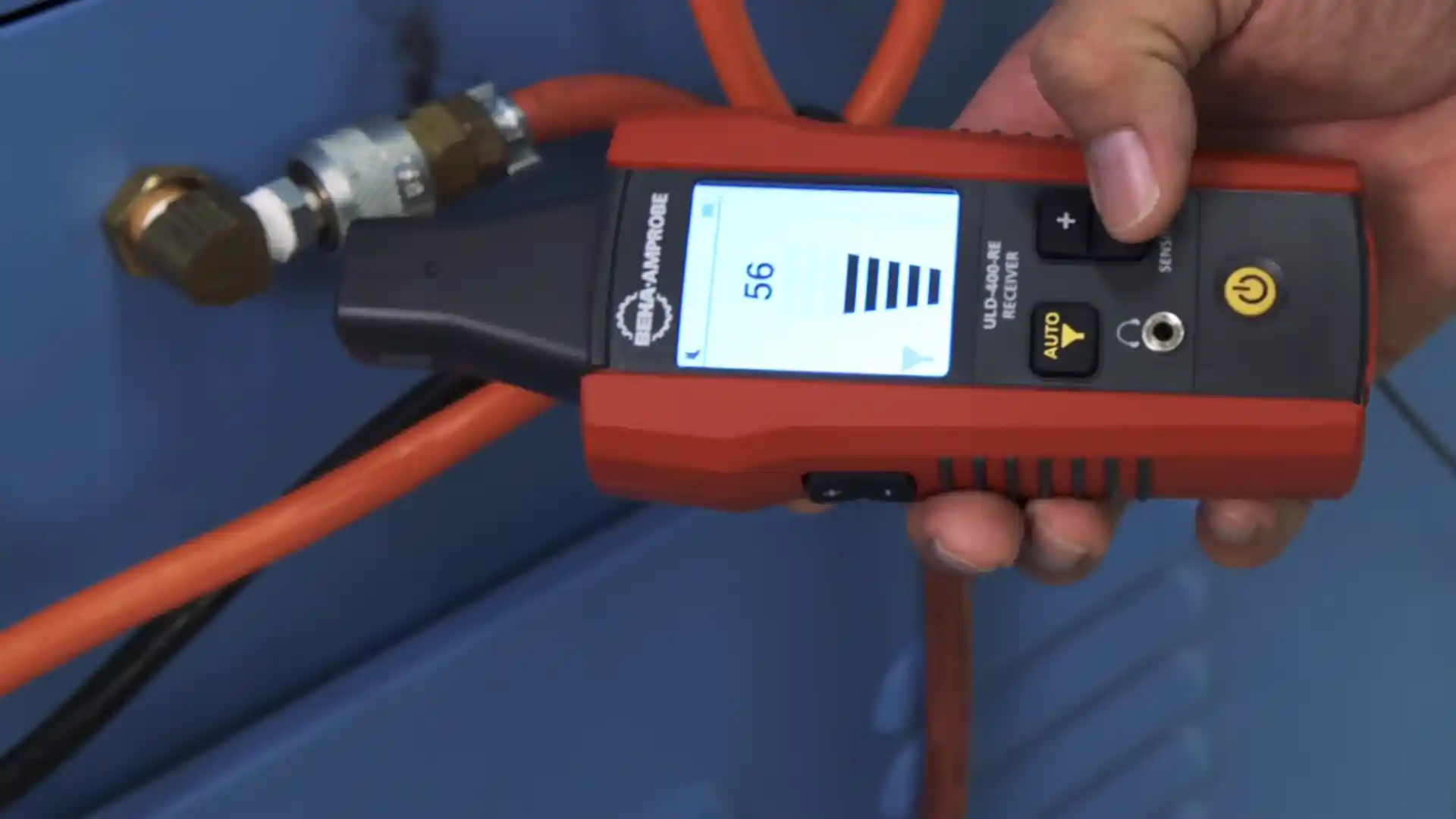
Ultrasonic detection picks up the high-frequency sound (above 20 kHz, beyond human hearing) that pressurized fluid makes as it escapes through a small opening. A directional ultrasonic gun isolates the leak source on equipment that is accessible above ground.
Equipment-pad work.
Fluid escaping through a small pressurized opening generates broadband noise across the audible and ultrasonic frequency ranges. The audible portion (200 to 2,000 Hz) is what acoustic methods listen for through ground or pipe walls. The ultrasonic portion (above 20 kHz) is what ultrasonic guns pick up through the air directly. Ultrasonic frequencies travel poorly through soil or concrete but excellent through air, which makes the method ideal for accessible above-ground equipment.
The directional ultrasonic gun has a tightly-focused pickup pattern. Pointing the gun at suspected leak sources around a piece of equipment isolates the actual leak point within seconds. Background audible noise (HVAC, traffic, conversation) does not affect ultrasonic readings because the gun filters out everything below 20 kHz. Pool equipment pads, water heater connections, HVAC condensate lines, and compressed-air systems all read well under ultrasonic methods. Call (303) 552-3896 for dispatch.
How We Detect Ultrasonic Leak Detection in Parker, CO
Ultrasonic detection runs a fast equipment-sweep pattern. Most calls resolve in 15 to 30 minutes once we are on the equipment pad.
System pressurization confirmation establishes that the suspect system is at normal operating pressure. Ultrasonic detection requires the leak to be actively flowing, which means the system must be pressurized. For pool plumbing, the pump runs during detection. For water heater testing, the supply is on and the unit is hot.
Equipment scan with directional gun sweeps the ultrasonic pickup across all the fittings, valves, unions, and equipment surfaces on the suspect system. The gun produces a strong audible click or hiss in the headset when it picks up ultrasonic signal. Sweeping methodically across all components identifies the strongest signal source.
Pinpoint confirmation at the strongest-signal location holds the gun still and tracks signal intensity at micro-positions to identify the exact leak point. Threaded fittings, pipe joints, and equipment seals all have different signal signatures; the focused signal location distinguishes between adjacent candidates.
Headphone amplification amplifies the ultrasonic-to-audible converted signal in the technician's headphones. The amplification can be cranked enough to make very small leaks loud and clear in the headset. Adjustable filtering on the gun lets the technician tune in to specific frequency bands within the ultrasonic range.
Confirmation by soap test or smoke test on confirmed-by-ultrasonic suspect locations. Soap bubbles confirm air or pressurized water leaks at fittings. Smoke pencils confirm directional air movement at HVAC penetrations. The confirmation tests verify the ultrasonic finding before any repair work begins.
What ultrasonic excels at in Parker, CO
Ultrasonic has specific application sweet spots that other methods do not cover as well.
Pool equipment pad work. Pool pumps, filters, multiport valves, salt cell installations, heater connections, and the maze of fittings on a typical equipment pad all read clearly under ultrasonic. Locating a small leak among 15 to 25 candidate fittings would take a long time with visual inspection alone; ultrasonic narrows it in minutes.
Water heater connection inspection. Tank-style water heaters have multiple potential leak points: cold and hot supply connections, T&P valve, drain valve, expansion tank fittings, and any unions in the supply or return path. Ultrasonic sweeps the unit and identifies the leak source faster than visual inspection of each candidate fitting.
HVAC condensate and refrigerant line. Condensate drain lines and refrigerant line set connections both produce ultrasonic signal when leaking. Refrigerant work is HVAC-specialist scope; we provide the diagnostic ultrasonic location and refer to an HVAC contractor for the actual refrigerant work.
Compressed-air systems in workshops, garages, and small commercial properties leak constantly at fitting and valve connections, and the leaks are nearly impossible to hear by ear. Ultrasonic identifies each leak point in seconds. Small business owners with compressed-air systems often save substantial operating cost by addressing ultrasonic-located leaks.
Vacuum system leak detection on closed vacuum loops (HVAC, refrigeration, sometimes solar thermal) where the system holds vacuum rather than pressure. Air entering the vacuum produces ultrasonic signal in the same way pressurized fluid escaping does.
Ultrasonic does not work well on buried or wall-cavity leaks because the ultrasonic signal cannot travel through soil or building material. Acoustic, tracer gas, or thermal methods cover those calls. Ultrasonic is the right tool when the leak surface is accessible from the air.
When Parker calls warrant ultrasonic
Pool and spa equipment-pad calls are the largest ultrasonic application in Parker. Master-planned cohorts with inground pools (Stonegate, Reata Ridge, Salisbury Heights, Hidden River, Bradbury Ranch, Lincoln Creek) generate routine ultrasonic work on pool equipment pad fittings. Most pool service calls include an ultrasonic sweep as part of the diagnostic, even when the primary issue is on the buried plumbing side.
Water heater service calls across all neighborhoods benefit from ultrasonic sweeps. Hard water at 9.2 grains per gallon from Parker Water and Sanitation District contributes to fitting corrosion and seal wear. Small leaks at threaded connections show clearly under ultrasonic before they progress to visible drip.
Compressed-air systems in the workshops of equestrian outskirts (Franktown, Sedalia, Elizabeth) and in commercial garages around Parker generate periodic ultrasonic work. Hobby workshops, small auto shops, and commercial property managers all benefit from periodic ultrasonic audits to identify air leaks that waste compressor capacity.
HVAC condensate line work happens primarily in finished basements of master-planned cohorts where the condensate drain runs through finished space. Failed condensate fittings cause ceiling staining below; ultrasonic locates the failure point precisely for targeted repair.
Ultrasonic detection $150 to $400.
Equipment-pad ultrasonic sweep $150 to $300. Comprehensive pool-and-spa pad audit $250 to $400. Compressed-air system audit $250 to $500 depending on system size. Water heater inspection $100 to $200. Detection cost typically folds into the repair when we proceed on the same visit.
Equipment leak that you can hear but cannot find?
Ultrasonic gun locates the exact source in minutes on accessible equipment.
☎ (303) 552-3896Ultrasonic detection questions Parker calls in with
Can ultrasonic find buried pipe leaks?
Generally no. Ultrasonic frequencies above 20 kHz do not travel well through soil, concrete, or other dense materials. The method works on leaks where the ultrasonic signal can travel through air directly from leak source to detector. Buried supply, slab leaks, and wall-cavity leaks all need different methods (acoustic, tracer gas, thermal imaging) that work through the intervening material.
How small a leak can ultrasonic find?
Very small. Quality ultrasonic guns can detect air-leak rates as low as 1/100 of a cubic foot per minute, which corresponds to a leak too small to feel with your hand or hear with the unaided ear. Water leak detection on pressurized systems is similarly sensitive. The high-end of the equipment range catches leaks that other methods cannot detect at all.
Will ultrasonic work on my pool's equipment pad if there's a lot of background noise?
Yes. Ultrasonic methods filter out all frequencies below 20 kHz, which is above all normal background noise from HVAC, traffic, conversation, pumps, or motors. The technician only hears the ultrasonic signal from the actual leak, with no audible noise getting through. This makes ultrasonic methods particularly valuable on busy equipment pads where multiple pumps and equipment generate substantial audible noise.
Related Leak Services in Parker, CO
Parker, CO & Douglas County Coverage
Ultrasonic methods apply primarily on equipment-pad calls and compressed-air systems across Parker.