
Spa Leak Detection & Repair in Parker, CO
Spa leaks concentrate at the jet bodies. Each jet uses a threaded fitting through the shell with a gasket seal, and those gaskets fail at the 8-to-15-year mark. Blower lines, shell cracks, and dedicated equipment-pack failures round out the spa failure map.
Jet body gasket focus.
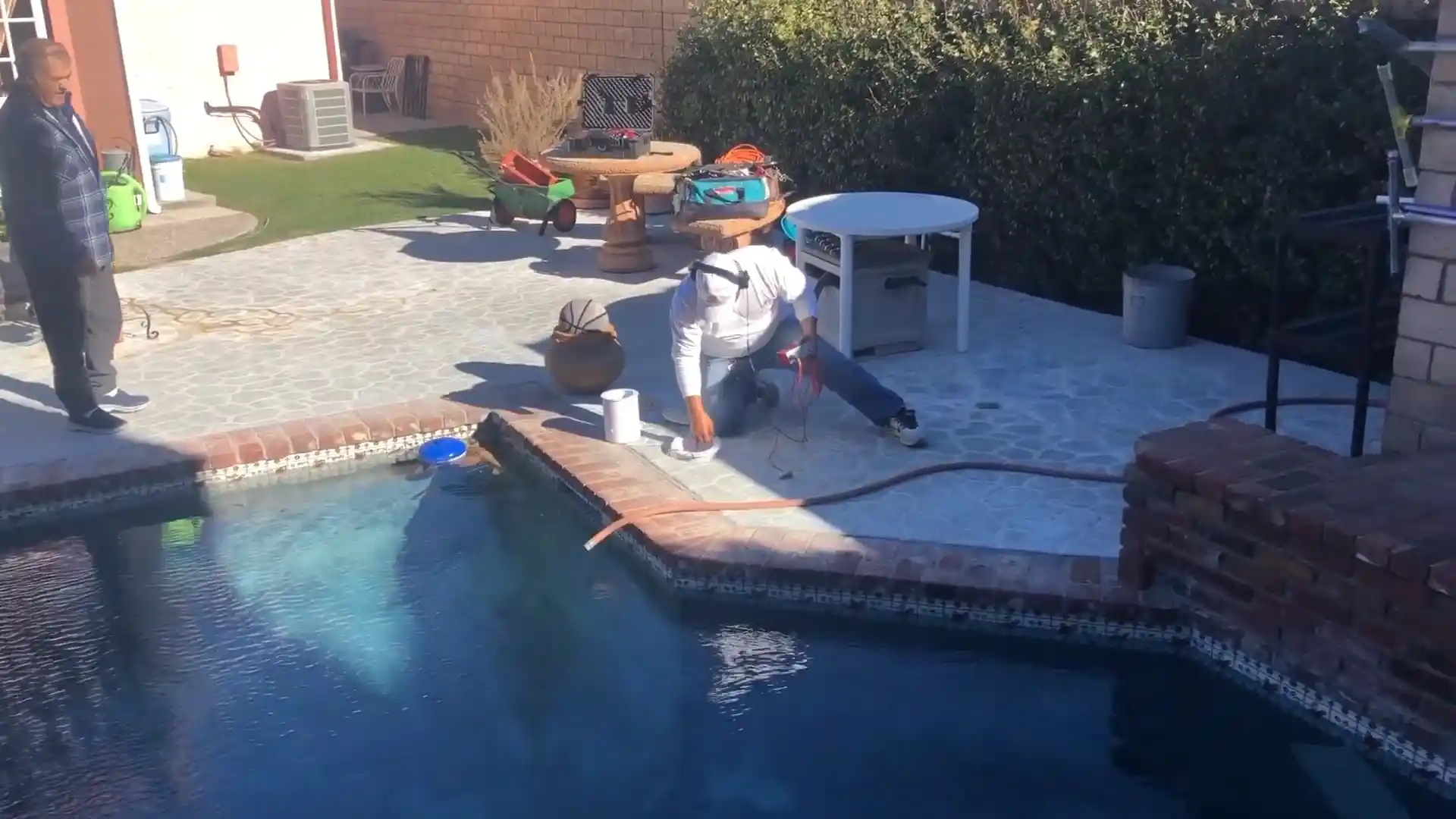
Spas in Parker fall into two categories. Built-in spas attached to inground pools share plumbing infrastructure with the pool but use dedicated jets, blower, and sometimes heating equipment. Standalone spas (sometimes called freestanding spas) have their own complete plumbing pack. The failure modes differ between the two categories, but both center on jet body gaskets as the primary leak source.
A typical spa carries 8 to 14 jets, each one penetrating the shell with a threaded fitting. The fitting uses a gasket between the jet body and the shell. Over 8 to 15 years the gaskets harden, compress past their working range, and begin to seep. Detection on most spa leak calls eventually points back to one or more of these gaskets. The other failure modes (blower lines, shell cracks, equipment-pack issues) are less common but more disruptive when they happen. Call (303) 552-3896 for dispatch.
How We Detect Spa Leak Detection and Repair in Parker, CO
Spa detection runs four checks. We start with jet bodies because they account for the majority of leaks.
Jet body dye trace goes first. With the spa full and the jets off, we introduce dye at each jet body in sequence and watch for dye being drawn into a leak. Failed gaskets show clearly within seconds. The check works through 8 to 14 jets in 15 to 25 minutes on most spas.
Blower line pressure test covers the air injection lines that feed each jet (on spas with venturi-driven aeration) or the dedicated blower lines (on spas with separate blower pumps). A failing blower line introduces water into the air system; we test by isolating and pressurizing each blower run.
Shell crack inspection looks at the visible shell surface for cracks, especially at the corners where stress concentrates. Acrylic and fiberglass shells can develop hairline cracks from freeze cycling or thermal shock. Dye trace at any suspect crack confirms whether it is active.
Equipment pack inspection covers the pump, heater, control pack, and all plumbing fittings on the pad (for built-in spas) or inside the cabinet (for standalone spas). Pump seal failures are common after 8 to 12 years. Heater element seals and union fittings round out the equipment-side failure points.
Jet rebuild kits to full spa replacement in Parker, CO
Spa repair scope follows the diagnostic finding. Most calls land on jet body gasket work.
Jet body gasket replacement drains the spa to below the affected jet, replaces the gasket, and refills. Cost $150 to $400 per jet depending on access and gasket type. If multiple jets are failing in the same age cohort, we often replace all of them in a single visit at lower per-jet cost.
Full jet body replacement on jets with damaged threads or cracked bodies costs $250 to $600 per jet including labor and parts.
Blower line repair swaps a failed line section or fitting. Cost $200 to $500 depending on access.
Shell crack repair uses acrylic or fiberglass crack injection systems. Surface cracks repair underwater; structural cracks may need partial draining and a more involved repair. Cost $300 to $1,200.
Pump and equipment pack repair covers seal replacement, control board replacement, or heater element work. Cost $250 to $1,500 depending on which component failed.
Full spa replacement on units past 12 to 18 years with multiple component failures. Cost $4,500 to $12,000 for a standard 4-to-6 person spa installation, more for premium models or larger sizes.
Spa patterns in Parker
Built-in spas attached to inground pools are common in Parker's master-planned premium cohorts. Stonegate, Reata Ridge, Salisbury Heights, Hidden River, Bradbury Ranch, and Lincoln Creek all have meaningful built-in spa prevalence on inground pool installations. Most of these spas date to the original pool build and are now 15 to 25 years old, well into the gasket-failure window.
Standalone spa installations cluster in equestrian outskirts (Franktown, Sedalia, Elizabeth) and in master-planned cohorts where homeowners added spas independently of pool construction. Cabinet-housed standalone spas in this category mostly use the same diagnostic approach but with limited access to the plumbing pack inside the cabinet.
Parker Water and Sanitation District hardness at 9.2 grains per gallon contributes to scale buildup inside spa plumbing and on heater elements. Spas typically run higher temperatures than pools (100 to 104 degrees versus 78 to 82), which accelerates scale formation. Scale buildup on heater elements is the dominant non-leak service issue on Parker spas.
Freeze cycling at Parker elevation puts real stress on spa plumbing. January lows of 13 to 22 degrees plus single-digit cold snaps require careful winterization on spas not used year-round. Year-round-use spas keep water flowing and stay warm, which is the safer approach for the equipment.
Spa leak repair $150 to $12,000.
Detection $250 to $500. Repair pricing: jet body gasket $150 to $400 per jet, full jet replacement $250 to $600, blower line $200 to $500. Shell crack $300 to $1,200. Pump or equipment pack $250 to $1,500. Full spa replacement $4,500 to $12,000.
Spa losing water faster than evaporation?
Jet body dye-trace diagnostic finds most spa leaks in under 30 minutes.
☎ (303) 552-3896Spa leak questions Parker calls in with
How long should spa jet gaskets last?
Most jet gaskets in Parker spas last 8 to 15 years on PWSD water. The combination of higher temperatures (100 to 104 degrees), aggressive chemistry (chlorine or bromine concentration higher than pools), and hard water shortens gasket life compared to coastal climates. Year-round-use spas see more thermal cycling than seasonal-use spas, which also affects gasket compression.
If one jet gasket is failing, will the others fail soon?
Statistically yes. All jet gaskets in a spa are the same age, exposed to the same chemistry and thermal cycles, and fail in clusters rather than one at a time. Replacing the failed gasket alone often results in another gasket leak appearing 6 to 18 months later. Many spa owners proactively replace all jet gaskets when the first one fails on spas past 8 years.
Does my pool insurance cover spa leak damage?
Usually no for the spa repair itself. Pool and spa repairs are typically excluded as maintenance items by standard Colorado homeowners policies. Water damage from sudden spa failure to surrounding decking, landscaping, or adjacent house foundations sometimes qualifies for damage coverage. Detailed documentation of the failure and the resulting damage helps if you file a claim.
Related Leak Services in Parker, CO
Parker, CO & Douglas County Coverage
Built-in spa density tracks premium inground pool installations. Master-planned cohorts dominate.