
Basement Water Intrusion Detection & Repair in Parker, CO
Water that shows up in your basement after a storm or after spring snowmelt is a different problem from a plumbing leak. Diagnosis focuses on the event correlation: what weather triggered the water, where it entered, and what drainage failed.
Post-event diagnostic.
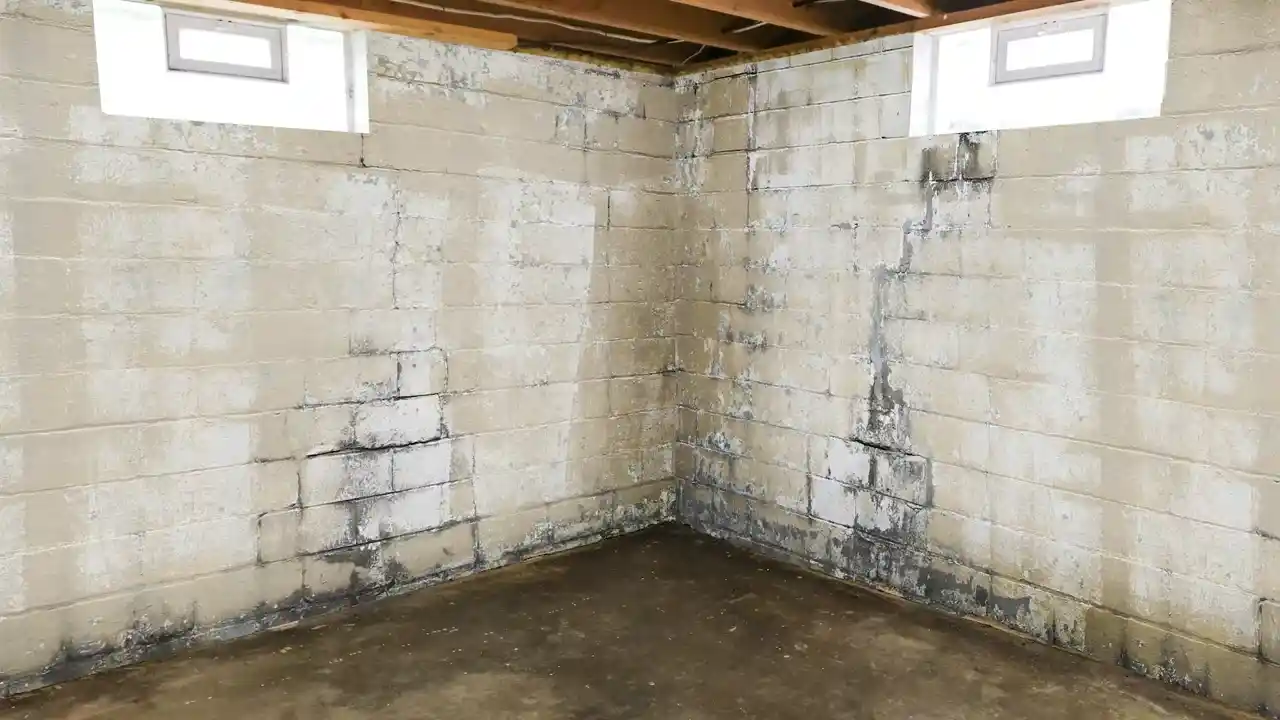
Water that appears in a Parker basement after a thunderstorm, a heavy snowmelt week, or an irrigation cycle is event-driven intrusion. The water came from outside the foundation and found a path through the wall, the floor, or the cove joint where wall meets floor. Plumbing-side leaks behave differently and get diagnosed through a separate process. Knowing which category you have determines whether the fix is exterior drainage work or interior plumbing repair.
Three event categories produce the bulk of Parker basement intrusion calls. Heavy thunderstorms in summer (often July through September) overwhelm exterior grading and downspouts. Spring snowmelt from March through May saturates the soil around the foundation. Irrigation cycles with poorly placed sprinkler heads or broken mainlines feed water into the foundation soil during the growing season. Each requires different remediation. Call (303) 552-3896 for dispatch.
How We Detect Basement Water Intrusion Detection and Repair in Parker, CO
Detection on intrusion calls focuses on the event correlation first, then narrows the entry point.
Event timing review establishes when the water appeared and what weather or activity preceded it. Same-day-after-rain points at exterior grading and roof drainage. Spring-only intrusion points at snowmelt and frost-thaw cycles. Mid-summer intrusion during dry weeks often points at irrigation source. The event pattern usually narrows the cause within minutes of arriving on the call.
Entry point mapping walks the basement perimeter looking for where water actually enters. Cove joint seepage (where wall meets floor) is the most common entry point. Visible floor cracks under hydrostatic pressure release water in spurts during peak loading. Pipe penetrations through the foundation can leak if the original seal failed. Window well drains overflow during heavy rain. Each entry point has a different remediation approach.
Exterior assessment covers grading slope away from the foundation, downspout extensions, surface drainage patterns, and any nearby irrigation lines that could be feeding water to the foundation soil. Most chronic intrusion issues in Parker trace back to exterior factors that can be corrected without major interior work.
Footing drain and sump check looks at the existing drainage system if installed. Failed sump pumps, clogged footing drains, and missing or undersized check valves all contribute to event-driven intrusion. Many Parker basements have functional sumps but undersized capacity for the peak loads they actually face.
Remediation usually starts outside in Parker, CO
Most basement intrusion remediation works from the outside rather than the inside, because the source of the water is exterior.
Exterior grading correction reshapes the soil around the foundation to slope at least 6 inches over the first 10 feet away from the house. Cost runs $800 to $3,500 depending on the area to be regraded and any landscape restoration needed. The most cost-effective remedy for the most common intrusion source.
Downspout extensions and surface drainage route roof water at least 6 to 10 feet away from the foundation. Cost runs $300 to $1,200 depending on the number of downspouts and the route lengths needed.
Window well repair or replacement addresses overflow during heavy rain. Cost $400 to $1,500 per well including drain line work where needed.
Sump pump installation or upgrade when the existing system is undersized or absent. Standard sump pump install $400 to $900. Higher-capacity pump with battery backup $700 to $1,500. The battery backup matters because Front Range thunderstorms occasionally bring power outages.
Interior drain tile and crack injection when exterior work is impractical or insufficient. Interior drain tile around the basement perimeter routes infiltrating water to the sump pit. Cost runs $2,500 to $6,000 depending on basement size. Crack injection for individual foundation wall or floor cracks runs $300 to $900 per crack.
Full exterior waterproofing on the most severe cases excavates the exterior foundation wall, applies waterproofing membrane, installs exterior drain tile, and backfills. Cost runs $8,000 to $25,000 for a standard residential basement. Reserved for chronic severe intrusion that less invasive remedies cannot address.
Where basement water shows up in Parker
Bentonite expansive clay in eastern Parker (Crowfoot Valley, Trails at Crowfoot, Hidden River) creates the highest intrusion risk. Bentonite swells with moisture and shrinks with drying, stressing foundation walls and cove joints over decades. Most homes in these zones have or need active drainage systems to manage the soil dynamics.
Master-planned cohorts (Stonegate, Stroh Ranch, Idyllwilde, Cottonwood Parker, Canterberry Crossing, Bradbury Ranch, Lincoln Creek, Reata Ridge, Parker Vista) with full basements face intrusion risk proportional to lot grading and downspout placement quality. Well-graded properties rarely have intrusion issues; poorly graded properties have them every spring.
Front Range summer thunderstorms drop 1 to 3 inches of rain in 30 to 60 minutes during active monsoon weeks (July through September). Even properly graded lots can see surface ponding during peak events. Properties with marginal grading or undersized downspouts produce intrusion calls during these storms.
Spring snowmelt is the second-largest event driver. Persistent snowmelt over 2 to 4 weeks in March and April keeps the foundation soil saturated for extended periods. Bentonite zones especially struggle with snowmelt because the moisture loading is sustained rather than brief.
Basement water repair $300 to $25,000 by scope.
Detection $300 to $600. Exterior grading $800 to $3,500. Downspout extensions $300 to $1,200. Window well repair $400 to $1,500. Sump pump install or upgrade $400 to $1,500. Interior drain tile $2,500 to $6,000. Crack injection $300 to $900 per crack. Full exterior waterproofing $8,000 to $25,000.
Water in the basement after a storm?
Event-driven diagnostic identifies the entry point and the source.
☎ (303) 552-3896Basement water intrusion questions Parker calls in with
How do I know if water is intrusion or a plumbing leak?
Timing is the giveaway. Intrusion correlates with weather: rain, snowmelt, or irrigation cycles. Plumbing leaks correlate with house water use. Shut off the house main at the meter; if moisture stops growing, the source is plumbing. If moisture keeps appearing in response to weather events with the main shut off, the source is intrusion. We run that test early in most calls.
Will exterior grading really solve the problem?
For most Parker intrusion cases, yes. Exterior grading correction plus downspout extension addresses the dominant intrusion source on properly built foundations. Severe cases involving bentonite clay, multiple wall cracks, or hydrostatic pressure during heavy events may need additional remediation. But on standard lots, the exterior work alone usually resolves the issue at a fraction of the cost of interior drainage.
Does insurance cover basement water intrusion damage?
Standard Colorado homeowners policies typically exclude flood and surface water intrusion. Sudden plumbing leaks that flood a basement are usually covered for the damage portion. The detection report we provide documents which category applies, which matters for the claim. Many homeowners add a flood endorsement or service-line coverage at policy renewal for $30 to $150 per year, which can cover intrusion events that standard policies exclude.
Related Leak Services in Parker, CO
Parker, CO & Douglas County Coverage
Intrusion risk concentrates in bentonite zones and properties with marginal exterior grading.