
Yard Leak Detection & Repair in Parker, CO
Yard leak detection starts with reading the yard. A patch of grass greener than the rest. A soft spot you sink into. A sinkhole forming above a buried line. Each surface sign tells us where to look before any tools come out.
Surface-read diagnostic.
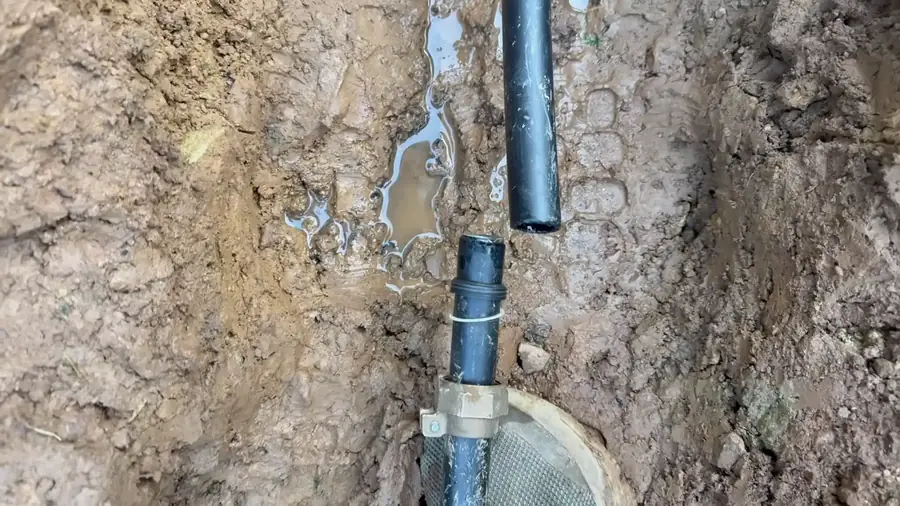
Surface signs reveal yard leaks before any equipment comes out of the truck. A strip of grass that stays greener than the rest of the lawn through August drought, fed by a slow water leak below. A soft spot you sink into when walking the yard. A small sinkhole forming where soil has washed away. Standing water that persists after rain has dried elsewhere. Each pattern points at a different underground source.
Reading the yard correctly narrows the leak to one of three buried systems. The water service line from curb stop to house. The sewer lateral from house to city main. The irrigation network with mainline, valve box, and laterals. Plus the rare deep leak on a sprinkler line that has been running undetected. Identifying which of the four is most likely cuts diagnostic time substantially. Call (303) 552-3896 for dispatch.
How We Detect Yard Leak Detection and Repair in Parker, CO
Surface diagnostic runs first because it cheaply narrows where the underground problem is.
Pattern reading walks the yard systematically and maps all visible signs. Greener grass strips often follow buried sewer or irrigation lines. Soft spots tend to align with supply line paths. Sinkholes usually indicate sustained water loss in one location. Persistent ponding after rain points at either soil compaction or drainage issues rather than active leaks. The map produced in the first 15 minutes typically points clearly at one or two suspect systems.
Soil moisture sampling at suspect points uses a soil probe to check moisture content at 12 to 18 inches deep. High moisture at depth without recent rain confirms an active leak feeding the area from below. The depth-of-moisture pattern sometimes indicates whether the leak source is shallow (irrigation lateral) or deep (mainline or sewer).
Smell assessment distinguishes sewer leaks from clean-water leaks. Sewage-source leaks produce noticeable odor especially after warm weather or when soil has been disturbed. Clean-water sources do not. The smell test is a quick differentiator between sewer-side and supply-side suspects.
Line tracing follows on whichever system the surface read flagged. Acoustic listening on the suspect line, electronic tracing along the line path, or camera inspection for sewer lateral candidates. The surface work has already narrowed the field, so the line tracing takes a fraction of the time it would on a blind search.
Repair routes back to the source system in Parker, CO
Yard leak repair follows the playbook for whichever system the diagnostic identified. The yard surface gets restored as part of every repair scope.
Water service line repair at a yard leak runs $1,500 to $4,500 for trenched repair, $4,500 to $8,000 for trenchless directional drilling that preserves landscape. The leak point gets opened, the failed section replaced, the trench backfilled, and the sod or landscape restored.
Sewer lateral repair covers spot dig and section replacement $2,000 to $4,500, pipe lining $4,500 to $9,000, full lateral replacement $6,000 to $15,000.
Irrigation mainline repair opens the leak point, swaps the failed section or fitting, restores hardscape and sod. Cost $400 to $1,800.
Irrigation lateral repair on confirmed leak points runs $150 to $450 per location. Lateral work usually only needs an 8-by-8 inch sod cut.
Landscape restoration at repair sites varies by scope. Simple sod replacement runs $100 to $300 per access cut. Larger restoration involving plantings, mulch, or hardscape coordinates with a landscaper. We document the disturbance with photos for the homeowner to use in landscaping decisions.
Sinkhole stabilization on yards where sustained leaking has hollowed out the soil involves backfilling with appropriate material and possibly adjustments to grading. Cost $400 to $1,500 depending on sinkhole size.
Yard leak patterns by Parker neighborhood
Mainstreet and Downtown Parker pre-1980 homes have the oldest underground infrastructure: galvanized water service, cast-iron sewer laterals, and original-construction irrigation if any. Yard leak calls in these neighborhoods often point at original galvanized supply line failures rather than newer-system issues.
The Pinery 1970s cohort has copper water service and a mix of cast-iron and PVC sewer laterals depending on the era. Yard leak surface signs in The Pinery often trace to copper pinholes in the buried supply or to sewer lateral joint failures at 45-plus year-old fittings.
Master-planned cohorts from the 1990s through 2010s use PEX or copper water service and PVC sewer laterals. The cohort includes Stonegate, Stroh Ranch, Idyllwilde, Canterberry Crossing, Cottonwood Parker, Bradbury Ranch, Lincoln Creek, Reata Ridge, Hidden River, Parker Vista, Black Feather, Trails at Crowfoot, Salisbury Heights, Newlin Gulch, and Hilltop Parker. Yard leaks in these cohorts more commonly trace to irrigation issues than to supply or sewer failures.
Bentonite expansive clay in Crowfoot Valley and Trails at Crowfoot adds soil-movement stress to all buried lines. Yard leaks in these zones often correlate with seasonal soil moisture cycles and the resulting line stress.
Yard leak repair $150 to $15,000 by source.
Detection $250 to $500. Repair pricing by source: irrigation lateral $150 to $450, irrigation mainline $400 to $1,800, water service line $1,500 to $8,000, sewer lateral $2,000 to $15,000. Landscape restoration $100 to $300 per access point.
Greener strip or soft spot in your yard?
Surface-read diagnostic narrows the source before line tracing.
☎ (303) 552-3896Yard leak questions Parker calls in with
Why is one strip of my lawn greener than the rest?
Three common causes. First, a buried sewer lateral leaking nutrient-rich wastewater that fertilizes the grass above. Second, an irrigation lateral with a slow leak that waters that strip more than the surrounding area. Third, just natural variation in soil composition or sun exposure. Smell helps distinguish: sewer-source strips often have noticeable odor when soil is disturbed. The pattern (straight line versus irregular) also helps; a straight greener line usually follows a buried pipe.
How deep do you have to dig for a yard leak repair?
Depends on which line is leaking. Irrigation laterals run 8 to 14 inches deep, so access cuts are shallow. Irrigation mainlines run 18 to 24 inches. Water service lines run 48 to 60 inches below frost line. Sewer laterals run anywhere from 3 to 8 feet deep. The diagnostic work measures depth precisely with locators so excavation goes directly to the leak point rather than searching blind.
Can I tell whether it's an irrigation leak myself by shutting off the irrigation?
Yes, partly. Shut off the irrigation controller and the irrigation mainline at the backflow preventer. Watch the wet area or greener strip over the next 3 to 5 days. If it dries out, irrigation was the source. If it stays wet, the source is water service line, sewer lateral, or a deeper irrigation leak that the backflow shutoff did not isolate. The test is quick and reduces the diagnostic field significantly before we arrive.
Related Leak Services in Parker, CO
Parker, CO & Douglas County Coverage
Yard leak symptoms appear across all Parker neighborhoods. Source line varies by housing era.