
PVC Pipe Leak Detection & Repair in Parker, CO
PVC pipe almost never fails mid-pipe. The joints, the glue lines, and the transition fittings to other materials are where the leaks appear. Drain, vent, irrigation, and CPVC supply all share the same failure pattern.
Joint and fitting focus.
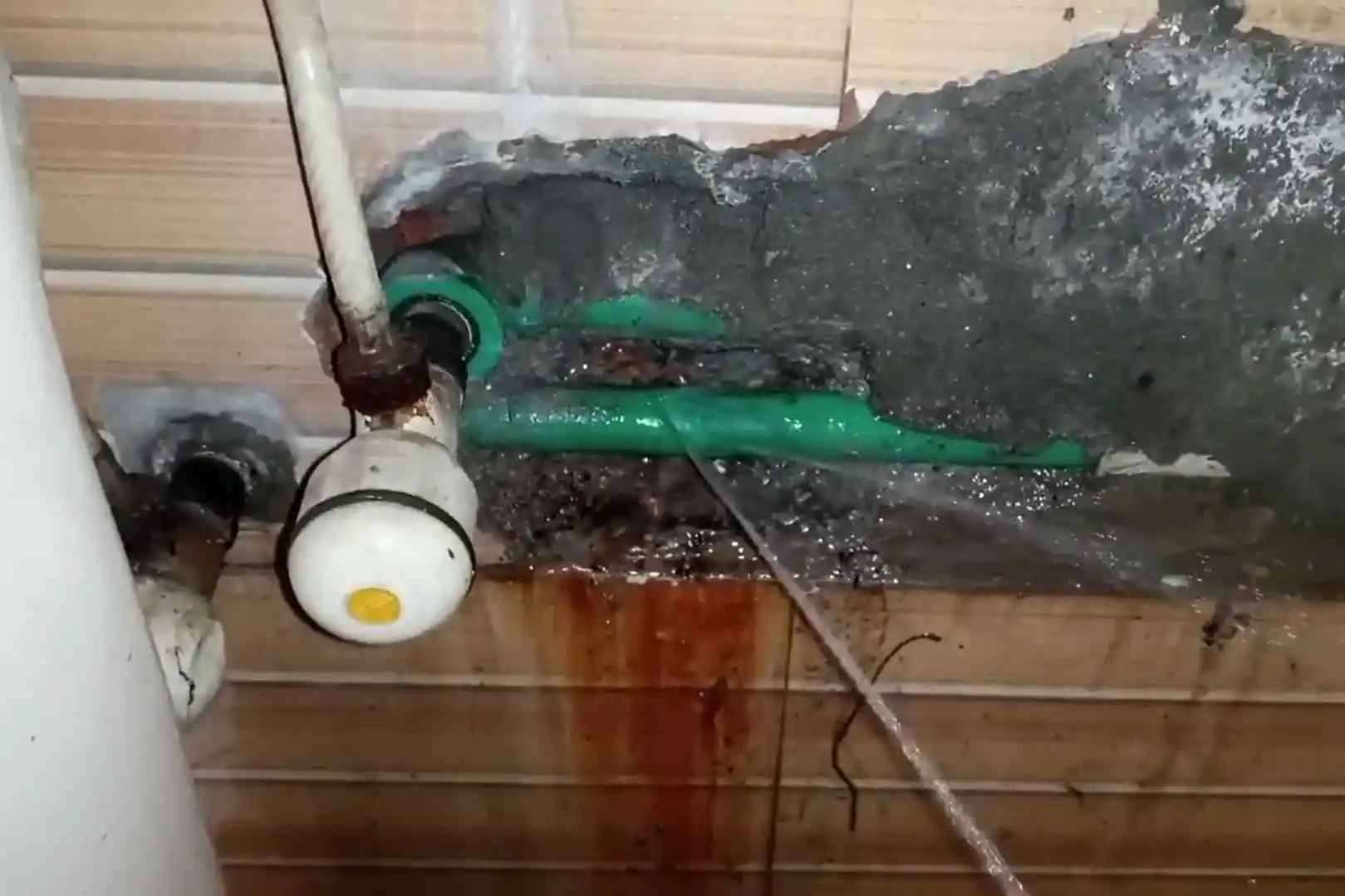
PVC pipe almost never fails mid-pipe. The joints, glue lines, and transitions to other materials are where the leaks appear. A 25-year-old PVC drain run can look pristine through camera inspection yet show a joint failure at the first or second fitting. The solvent-weld bond at the glue line breaks down faster than the pipe wall itself.
Parker uses PVC in four common applications: gravity drain lines (the dominant use), vent stacks, irrigation supply and laterals, and sometimes CPVC for hot-water supply in older retrofits. Each application has its own failure pattern: drain joints fail at the bond line, vent stacks fail at attic transitions, irrigation PVC fails at freeze points, CPVC supply fails at temperature-cycling joints. Call (303) 552-3896 for dispatch.
How We Detect PVC Pipe Leak Detection and Repair in Parker, CO
PVC detection focuses on joints rather than pipe runs. Visual inspection of accessible joints solves a large share of calls inside the first 10 minutes.
Visual joint inspection covers all accessible PVC connections at the water heater, basement, crawl space, mechanical room, and equipment pad. A failing solvent-weld bond often shows as a slight separation, a moisture stain along the glue line, or mineral deposits at the joint shoulder. Accessible joints get checked first because they resolve the call without further work.
Camera inspection covers drain and sewer runs that go behind walls or under slabs. The camera shows the joint at each fitting and any separation, offset, or crack. Most PVC drain failures locate definitively on the camera pass within 20 to 40 minutes.
Dye tracing confirms suspect joints when the camera read is ambiguous. We introduce dye at a fixture, watch for the color to appear at the suspect joint, and confirm the leak path. Dye also helps differentiate between active joint failure and historical staining that no longer represents an active leak.
Freeze-crack detection on exterior PVC (hose bibs, exposed irrigation risers, garage supply lines) is mostly visual. The crack itself is usually visible once the line is pressurized and the leak point is exposed.
Joint replacement is the dominant repair in Parker, CO
PVC repair scope is usually smaller than copper or galvanized because the failure mode is local to a joint rather than distributed across the pipe.
Joint replacement cuts out the failed fitting and the surrounding 3 to 6 inches of pipe on each side, then glues in a new fitting with two coupling joints. Cost $250 to $800 per repair including drywall or hardscape access. Most Parker PVC drain calls land here.
Section replacement covers a 4 to 12 foot run when multiple joints in the same area have failed. Cost $500 to $1,500 per section. Less common than single-joint work; mostly seen on freeze-damaged irrigation runs in exposed locations.
CPVC supply repair works the same way as drain PVC but uses CPVC-specific primer and cement at the joint. Cost $300 to $900 per joint. CPVC failures are more common at temperature-cycling joints near the water heater than in cold-supply runs.
UV-degraded exterior PVC replacement swaps exposed PVC that has become brittle from years of sun exposure. Common on hose bib supply, exposed irrigation risers, and any PVC that should have been protected by a sleeve or paint but was left bare. Replacement uses Schedule 40 PVC routed through protective covers.
PVC across Parker's three housing eras
The 1990s and early-2000s master-planned phases (Stonegate, Stroh Ranch, Idyllwilde, Canterberry Crossing, Cottonwood Parker) were the first Parker cohorts to use PVC drain throughout. Those drain systems are now 25 to 35 years old. Joint failures at fittings are the most common call pattern. Camera inspection on these homes routinely shows isolated joint issues at year 25 to 30.
Mid-2000s and 2010s builds (Bradbury Ranch, Lincoln Creek, Reata Ridge, Trails at Crowfoot, Hidden River, Parker Vista, Black Feather) use PVC drain plus PVC vent and PVC irrigation laterals. The drain joints are still early in their life cycle. Most failures so far have traced to irrigation-side PVC freeze damage rather than drain or vent issues.
Front Range freeze cycling drives a disproportionate share of exterior PVC failures. January lows reach 13 to 22 degrees and single-digit cold snaps occur every winter. Any PVC not properly drained or insulated before the first freeze is a real candidate for crack damage that surfaces in spring.
PVC pipe detection $200 to $450. Repair $250 to $1,500.
Detection $200 to $450. Repair pricing: joint replacement $250 to $800, section replacement $500 to $1,500, CPVC supply joint $300 to $900, exterior UV-damaged replacement $400 to $1,200.
Crack in exposed PVC or fitting joint?
Joint repair scope on most calls. Same-day across all Parker neighborhoods.
☎ (303) 552-3896PVC pipe leak questions Parker calls in with
Why do PVC joints fail more often than the pipe itself?
PVC pipe walls are dimensionally stable for 50-plus years under normal conditions. Solvent-weld joints, however, depend on the installer applying the right primer, the right cement, the right cure time, and the right joint pressure during assembly. Any deviation produces a marginal bond that fails after 15 to 30 years of normal stress. The pipe outlives the joint by a wide margin in real-world installations.
Can you repair PVC without cutting drywall?
Only if the failed joint is accessible. Most PVC drain failures are behind walls, under floors, or in attic spaces, so some access cutting is usually required. The detection work locates the failed joint to within an inch, which keeps the access cut small (typically 12-by-12 inches at the confirmed joint). The drywall patch goes back same day or next visit.
My exposed PVC outside is cracking. Replace or just paint over it?
Replace, almost always. UV-degraded PVC has lost its impact resistance and continues to brittle even if painted. The crack will keep growing and other parts of the exposed run will fail next. Replacement with Schedule 40 PVC inside a protective sleeve or paint-protected location addresses the failure mode rather than masking the symptom.
Related Leak Services in Parker, CO
Parker, CO & Douglas County Coverage
PVC concentration tracks 1990s and later builds. Mainstreet pre-1990 homes mostly cast iron, not PVC.