
Pipe Leak Detection & Repair in Parker, CO
Pipe material drives the diagnostic approach. Copper fails one way, PEX another, PVC a third. We diagnose by material and age, then choose the repair path that fits the rest of the pipe's working life.
Material-specific repair path.
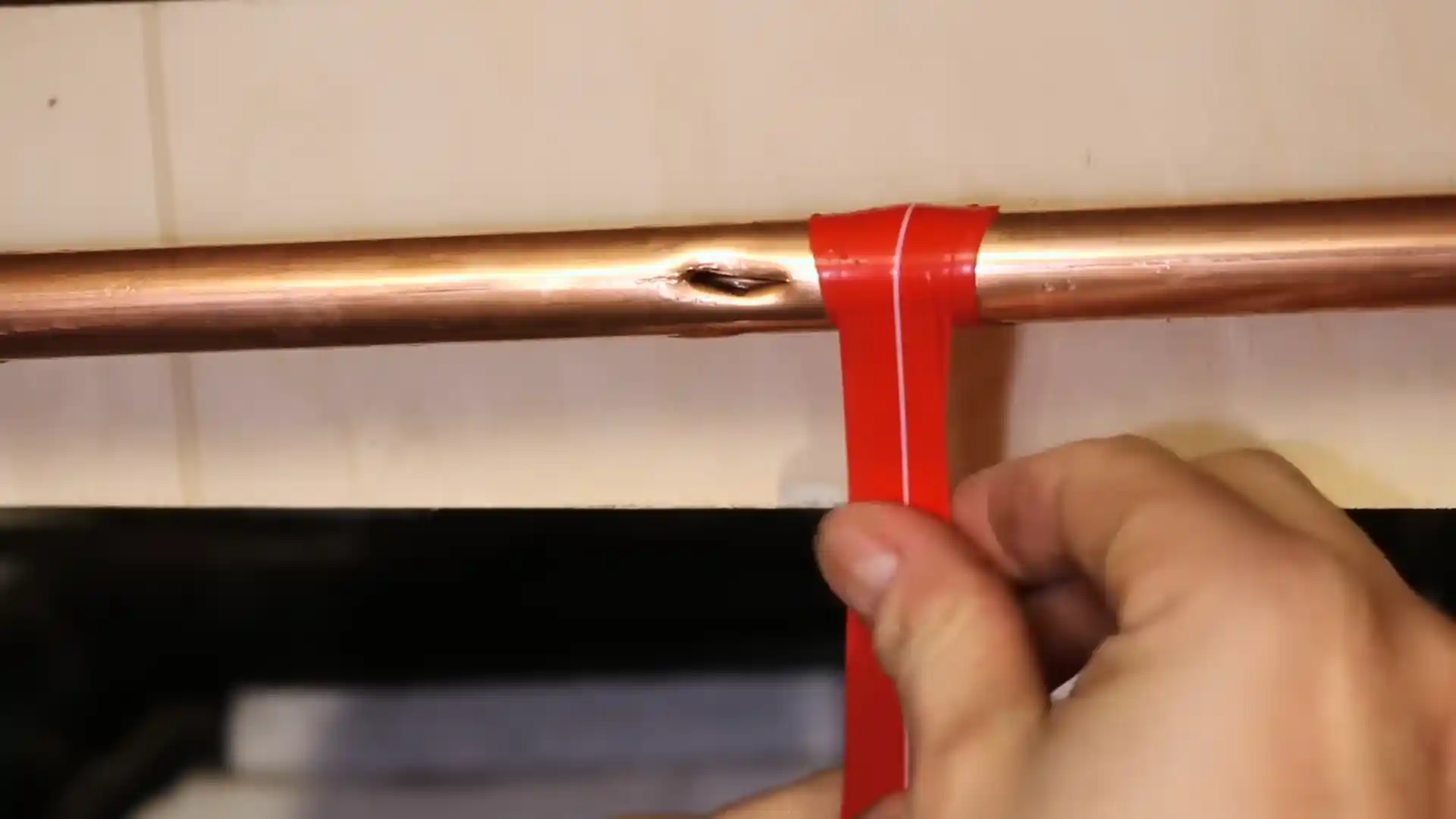
The pipe that is leaking tells you most of the diagnostic story before any tool comes out. Copper supply lines fail through pinhole pitting in middle age, then accelerated failure once one pinhole shows. PEX supply lines fail at fittings, almost never mid-pipe. PVC drain lines fail at glued joints and at freeze points. Galvanized supply lines (still present in some pre-1980 Mainstreet homes) fail through internal scale buildup and external corrosion. Each material has its own playbook.
Parker homes built across five decades use most of the material catalog. A 1972 Pinery house has copper supply, galvanized vent, cast-iron drain. A 1998 Stonegate has copper supply, PVC drain and vent. A 2015 Bradbury Ranch has PEX supply, PVC drain, and PEX hot-cold runs at the manifold. The material map shapes everything from where to look for the leak to whether spot repair or full repipe is the cost-effective call. Call (303) 552-3896 for material-specific dispatch.
How We Detect Pipe Leak Detection and Repair in Parker, CO
The first step on any pipe leak call is identifying what material is failing. Visual inspection at accessible runs (basement, crawl space, mechanical room) usually answers it inside two minutes. Color, fitting style, and pipe diameter all give the material away. From there, the locate uses the right tool for the material.
Copper supply locating uses acoustic listening because copper transmits the pressurized-leak signature well through walls. Thermal imaging works on hot-side copper leaks. Most copper leaks locate within 20 minutes of acoustic work in a quiet house.
PEX supply locating focuses on the fittings (crimp, expansion, push-fit) because the pipe itself almost never fails mid-run. Visual inspection of accessible fittings, manifolds, and stub-outs solves most PEX calls. When a leaking PEX fitting is behind drywall, acoustic listening works but the signature is quieter than copper.
PVC and CPVC drain locating uses camera inspection and dye tracing. Glued joints fail at the bond line, not in the pipe wall. The camera shows the failure point directly and rules out other suspects fast.
Galvanized supply locating in older Parker homes uses pressure testing because the internal scale buildup obscures acoustic signatures and the failure can be anywhere along the run. Most galvanized calls end with a recommendation to replace the entire material rather than spot-repair a 50-plus-year-old line.
Repair path by material and remaining service life in Parker, CO
Repair scope reflects both the immediate leak and the remaining life expectancy of the surrounding pipe. A copper pinhole at year 35 gets a different recommendation than the same pinhole on year-12 copper. The math considers cost of the spot repair versus the probability of a second failure within 18 months.
Copper repair options span spot repair ($400 to $1,000), section replacement ($800 to $2,400), and whole-house repipe to PEX ($5,500 to $12,000). Repipe usually wins when the copper is past 30 years on PWSD water and 25 years on Pinery or Pine Lane private well supply.
PEX repair usually means fitting replacement at the leak point. Cost runs $200 to $600 including drywall access if needed. Mid-pipe PEX failures are rare enough that section replacement is uncommon outside of clear damage events like a remodel cut or a chewed-through line.
PVC and CPVC repair covers joint sealing or section replacement at the failed glue line. Cost $250 to $800 per repair point depending on access. Freeze-cracked exterior PVC (hose bibs, irrigation, exposed risers) gets section replacement plus an insulation or routing change to prevent recurrence.
Galvanized repair on Mainstreet pre-1980 homes is usually full-line replacement with copper or PEX rather than spot repair. The remaining galvanized has the same failure clock running, so spot repairs typically generate a second call inside two years.
Parker housing era determines what pipe material you have
The Pinery 1970s cohort is predominantly copper supply, cast-iron drain, galvanized vent. The 1990s and early-2000s master-planned phases (Stonegate, Stroh Ranch, Idyllwilde, Canterberry Crossing, Cottonwood Parker) shifted to copper supply with PVC drain and vent. Mid-2000s and 2010s builds (Bradbury Ranch, Lincoln Creek, Reata Ridge, Hidden River, Parker Vista, Black Feather, Trails at Crowfoot) transitioned to PEX supply, PVC drain and vent.
A few pre-1980 Mainstreet and Downtown Parker homes still have original galvanized supply, which is the highest-priority replacement candidate. Parker Water and Sanitation District's 9.2-grain hardness accelerates copper pinhole risk across all copper-era cohorts. The Pinery and Pine Lane Estates face the same risk earlier because well-water hardness runs higher.
Pipe leak diagnosis $200 to $500. Repair $200 to $12,000.
Diagnosis runs $200 to $500 across materials. Repair pricing varies widely by material. PEX fitting swap $200 to $600, copper spot repair $400 to $1,000, PVC joint $250 to $800. Galvanized full-line replacement $4,500 to $9,000. Copper-to-PEX whole-house repipe $5,500 to $12,000.
Pipe popping, hissing, or staining a wall?
Material-specific repair path on the first visit. 24/7 dispatch across Douglas County.
☎ (303) 552-3896Pipe leak questions Parker calls in with
Can you tell what pipe material I have without opening walls?
Usually yes. The accessible plumbing at the water heater, basement, crawl space, or under-sink connections shows the material in use. Most Parker homes have at least one visible run that identifies what is behind the walls. We confirm material in the first few minutes of every call.
My home has PEX. Why is it leaking if PEX is so reliable?
PEX itself is reliable. The fittings (crimp rings, expansion sleeves, push-fit connectors) are where most PEX system failures occur. A failed crimp ring, an installer-error expansion, or a degraded push-fit O-ring all show as a leak at the fitting, not in the pipe. Fitting failures are usually quick fixes once located.
Should I repipe even if only one pipe is leaking right now?
Depends on the material and age. If it is copper past 30 years on PWSD water (or 25 on private well), repipe is usually the better long-term value because more pinholes are statistically likely. If it is galvanized in a pre-1980 home, repipe is almost always the call. If it is younger copper, PEX, or PVC, spot repair is usually the right answer.
Related Leak Services in Parker, CO
Parker, CO & Douglas County Coverage
Pipe material varies sharply by Parker housing era. The Pinery copper, Stonegate copper-plus-PVC, Bradbury Ranch all-PEX.