
Toilet Tank Leak Detection & Repair in Parker, CO
An internally-leaking toilet tank shows nothing on the floor and nothing on the wall. Water goes from tank to bowl to drain, silently, while the water bill climbs by 50 to 300 gallons per day. Dye-test diagnostic takes 15 minutes.
Silent-leak detection.
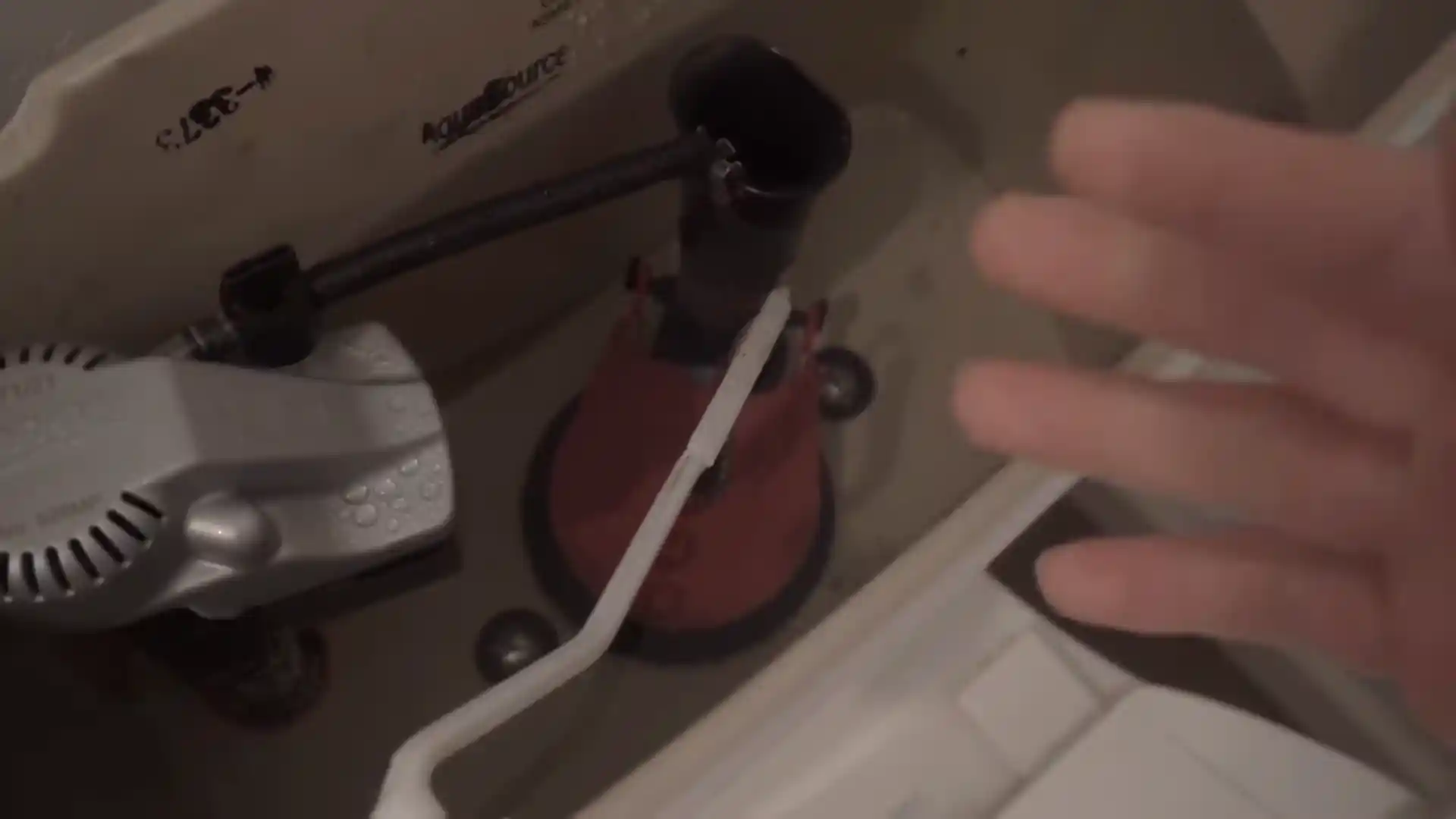
Hidden tank leaks cost Parker homeowners more annually than any other fixture failure. The mechanism is simple: water seeps past a worn flapper or flush-valve seal, travels from the tank into the bowl, then down the drain. Nothing reaches the floor. Nothing stains a wall. The only sign is a water bill that quietly climbs month over month, often unnoticed for half a year or longer. Dye testing on the suspect toilet exposes the issue in 15 minutes.
External tank leaks are the rarer category. A failing fill-valve assembly that runs continuously can overflow through the overflow tube. A degraded gasket between the tank base and the bowl rim drips at the seam. A hairline porcelain crack in the tank wall seeps slowly. Each external failure has its own diagnostic and repair, all distinct from the wax-ring and supply-line problems covered separately. Call (303) 552-3896 for dispatch.
How We Detect Toilet Tank Leak Detection and Repair in Parker, CO
Detection runs four specific checks, each targeting a different tank component.
Fill valve test watches the fill cycle. After flushing, the fill valve should run for 30 to 90 seconds, then shut off cleanly. Continuous running, intermittent re-running every few minutes, or failure to fill all indicate fill valve issues. Hard-water scale on the fill valve mechanism is the dominant failure mode on Parker toilets past 5 to 8 years.
Flush valve and flapper test uses dye in the tank water. We add food coloring, wait 15 minutes without flushing, then check the bowl. If color appears in the bowl, water is leaking from tank to bowl through a failing flapper or flush valve seal. This is the most common silent leak on Parker toilets and accounts for most unexplained water bill increases.
Tank-to-bowl gasket inspection looks at the seam between tank and bowl. Water at the seam, mineral staining on the bowl below the seam, or visible gasket deterioration all indicate gasket failure. Tank-to-bowl gaskets last 12 to 20 years on PWSD water; the gasket compression weakens over decades.
Tank crack inspection goes last because cracks are rare but consequential. Visible hairline cracks in the porcelain tank wall, moisture or mineral residue around a suspected crack, or a tank that has slowly developed a wet exterior all point at tank-wall failure. Cracked tanks always require replacement; porcelain crack repair does not hold under tank water weight cycling.
Repair scope by component in Parker, CO
Most tank repairs are quick. Component costs are low; labor is the bigger variable.
Fill valve replacement takes 20 to 35 minutes. New fill valve assemblies (Fluidmaster, Korky, others) are universal-fit and code-compliant. Cost $120 to $250 including parts.
Flush valve and flapper replacement covers the flapper alone or the full flush valve assembly. Flapper-only replacement runs $90 to $180. Full flush valve replacement (requires removing the tank from the bowl) runs $200 to $400.
Tank-to-bowl gasket replacement requires tank removal, gasket swap, and tank reseating. Cost $200 to $450. We typically replace the tank-bolts and washers at the same time as preventive maintenance.
Full tank replacement when a tank is cracked, severely damaged, or when matching a tank to a discontinued bowl. Cost $300 to $700 for tank-only replacement. If the bowl is also showing age, full toilet replacement at $400 to $900 is usually the better value.
Complete tank component rebuild replaces fill valve, flush valve, flapper, and tank-to-bowl gasket together. Cost $350 to $550. The standard preventive call for toilets past 12 years where multiple components are nearing end of life.
Why Parker tanks wear faster
Parker Water and Sanitation District hardness at 9.2 grains per gallon precipitates calcium and magnesium scale inside every tank component. Fill valves, flush valves, flappers, and gaskets all see accelerated wear compared to soft-water markets. Standard PWSD homes need first fill valve service at year 5 to 8 on heavy-use toilets, year 8 to 12 on lower-use.
The Pinery and Pine Lane Estates run shorter cycles. Private wells in those neighborhoods sometimes deliver hardness past 17 grains per gallon, which can compress component life to year 3 to 5 on the most active toilets.
Master-planned cohort homes built in the 1990s and 2000s have original builder-grade toilets in their second or third component-rebuild window. Many homes are working through the decision of rebuild-component-by-component versus full toilet replacement to a modern high-efficiency model.
Tank leak repair $90 to $700.
Diagnosis usually folds into repair. Pricing: flapper only $90 to $180, fill valve $120 to $250, flush valve assembly $200 to $400, tank-to-bowl gasket $200 to $450, complete tank rebuild $350 to $550, tank-only replacement $300 to $700.
Toilet running constantly or refilling on its own?
Tank component repair runs same-day on most Parker calls.
☎ (303) 552-3896Toilet tank questions Parker calls in with
Why does my toilet keep refilling every few minutes when no one is using it?
Almost always a leaking flapper or flush valve seal. Water slowly escapes from tank to bowl past the failing flapper, the tank water level drops, the fill valve detects the drop and refills the tank, the cycle repeats. The dye test confirms diagnosis in 15 minutes. Flapper replacement usually solves it; full flush valve replacement is needed if the valve seat itself has worn.
Should I replace the whole tank or just the components?
Depends on tank condition and age. If the porcelain tank itself is intact and the toilet is under 20 years old, component rebuild is almost always cheaper than tank replacement. If the tank has hairline cracks, mineral pitting on the porcelain surface, or matching difficulties, replacement is the right call. Full toilet replacement to a high-efficiency model often pays back in water savings within 3 to 5 years on heavily used toilets.
Will a water softener prevent tank component failures?
Mostly yes. Softened water removes the calcium and magnesium scale that drives most tank component wear. A water softener typically extends fill valve life by 50 to 100 percent, flapper life by similar amounts, and flush valve life proportionally. The softener install cost ($1,200 to $3,500) usually pays back in extended fixture life across all plumbing, not just toilets.
Related Leak Services in Parker, CO
Parker, CO & Douglas County Coverage
Tank component wear tracks water hardness more than housing era. PWSD-served vs Pinery well.