
Toilet Leak Detection & Repair in Parker, CO
Toilet leaks in Parker come from three places. The tank-to-bowl gasket. The supply line at the wall. The wax ring at the base. Each has a distinct symptom and a distinct repair scope.
Same-day across Parker.
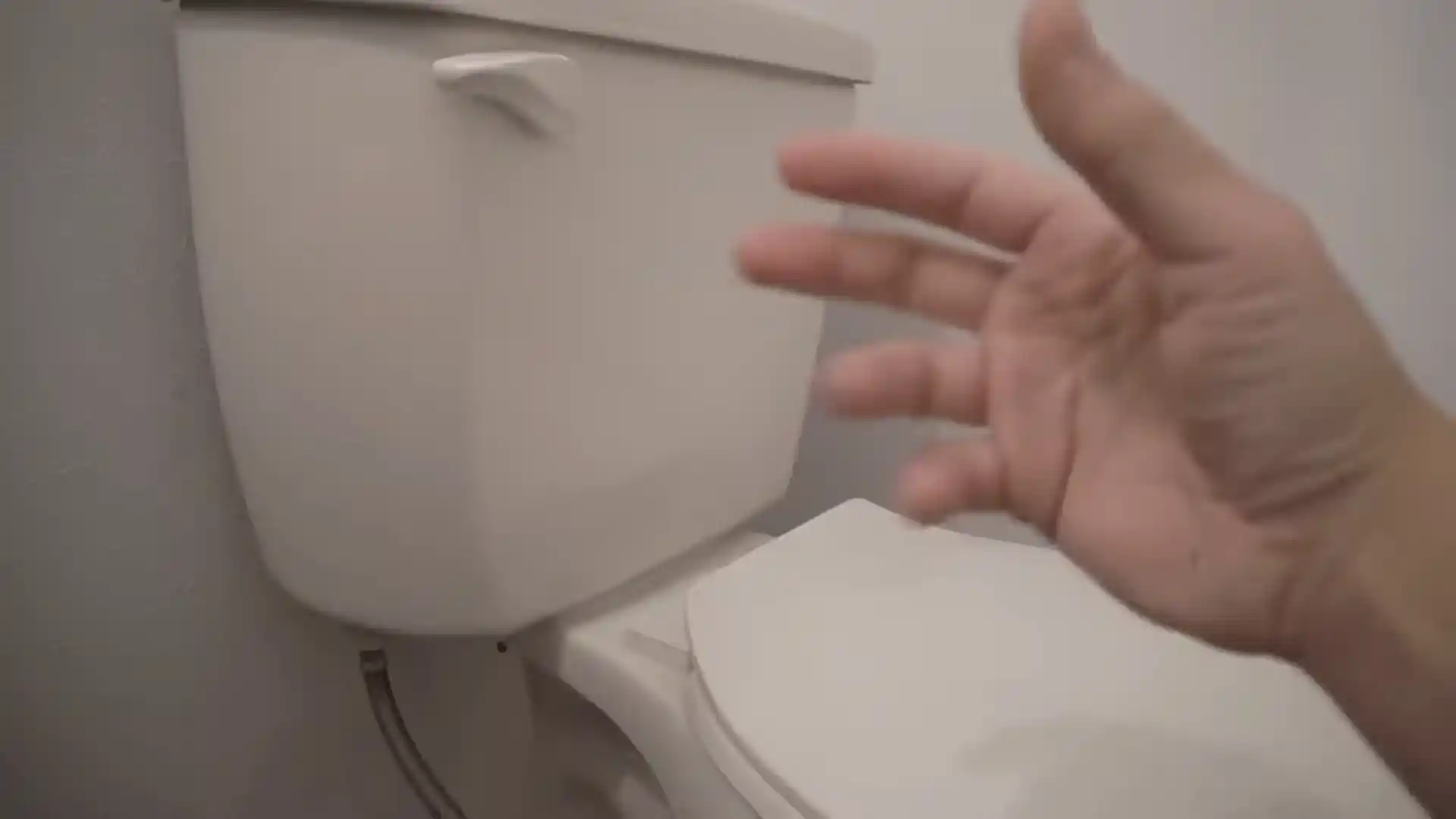
Three leak sources account for nearly every toilet call in Parker. The tank-to-bowl gasket fails first on toilets past 12 to 15 years. The flexible supply line at the wall fails second, usually at the compression fitting or the braided sleeve. The wax ring under the toilet base fails third, often as a slow seep that stains the subfloor before reaching the ceiling below.
Distinguishing which source is leaking takes 5 to 10 minutes on most calls. Water on the floor around the base could be wax ring or could be condensation. Water in the ceiling below could be wax ring or could be supply line at the wall. The diagnostic order matters because the repair scope differs by a factor of four between the easiest source and the most disruptive. Call (303) 552-3896 for dispatch.
How We Detect Toilet Leak Detection and Repair in Parker, CO
Detection runs three checks in sequence. The first two solve most calls without further work.
Supply line and shutoff inspection goes first. The flexible line between the wall shutoff and the toilet tank is a common failure point, especially on lines past 8 years old. Visual inspection at the compression fitting, the braided sleeve, and the tank connection finds most supply leaks in under two minutes. Wall-side leaks at the shutoff valve packing or the angle stop fitting are nearly as common.
Tank-to-bowl gasket test runs second. We dye-test the tank water, wait 10 minutes, and look for color appearing at the bowl rim or at the gasket joint between tank and bowl. Tank leaks that drip into the bowl run continuously without an obvious external sign, and they show up on the water bill before they show up on the floor.
Wax ring inspection runs third. The seal between the toilet base and the closet flange in the floor uses a wax compression ring that lasts 15 to 30 years before flattening or cracking. A failed wax ring leaks during every flush, then dries between flushes. Subfloor staining at the toilet base, a slight rocking motion when the toilet is sat on, or moisture in the ceiling below all point at the wax ring.
Three repair scopes match the three sources in Parker, CO
Each source has a corresponding repair, with cost differences large enough that diagnosis matters.
Supply line replacement is the quickest fix. We swap the flexible line for a new braided stainless line and replace the angle-stop shutoff if it shows wear. Total time about 20 minutes. Cost runs $120 to $250 including parts.
Tank-to-bowl gasket replacement requires removing the tank from the bowl, swapping the gasket and tank bolts, and reseating the tank. The flush mechanism often gets replaced as preventive maintenance during the same visit. Cost runs $200 to $450.
Wax ring replacement is the most involved. The toilet pulls off the floor flange, we inspect the flange for cracks or corrosion (replace if needed), set a new wax ring, and reseat the toilet. If the subfloor has water damage, we coordinate restoration separately. Cost runs $250 to $600 for a routine wax ring; flange replacement adds $150 to $300.
Full toilet replacement sometimes makes economic sense on toilets past 25 years where multiple components have failed. New high-efficiency toilets (1.28 GPF or dual-flush) run $400 to $900 installed including removal and disposal of the old fixture.
Toilet leak patterns by Parker housing era
The Pinery 1970s cohort has many original toilets approaching 50 years of service. Wax rings on these are well past expected life. Supply line replacements are nearly universal at the next maintenance visit because original chrome supply lines do not handle modern PSI well.
Parker Water and Sanitation District delivers water at 9.2 grains per gallon, which precipitates calcium and magnesium scale inside tank components. Fill valves, flush valves, and flapper gaskets all wear faster than soft-water markets. The Pinery and Pine Lane Estates owners see even shorter component life because well water hardness runs past 17 grains per gallon in some homes.
The 1990s and 2000s cohorts (Stonegate, Stroh Ranch, Idyllwilde, Cottonwood Parker, Lincoln Creek, Bradbury Ranch) sit in the original-toilet replacement window. Many of these homes are working through their first full toilet swap from builder-grade fixtures to higher-efficiency models.
Toilet leak detection $100 to $200. Repair $120 to $900.
Diagnosis is brief on most toilet calls; $100 to $200 covers the visit and a written quote. Repair pricing by source: supply line $120 to $250, tank-to-bowl gasket $200 to $450, wax ring $250 to $600, flange replacement adds $150 to $300, full toilet replacement $400 to $900 installed.
Toilet running, leaking, or rocking?
Three-source diagnostic on the first visit. Most calls fixed same day.
☎ (303) 552-3896Toilet leak questions Parker calls in with
How can I tell if my toilet is leaking before it shows on the floor?
A few drops of food coloring in the tank, wait 15 minutes without flushing. If color appears in the bowl, the flapper or the tank-to-bowl gasket is leaking water from tank to bowl, which shows up on the water bill but never on the floor. Hidden tank leaks of this type can waste 50 to 300 gallons a day. The dye test is the standard first check on any unexplained bill increase.
My toilet wobbles slightly when I sit. Is that the wax ring?
Probably yes, or the toilet's anchor bolts have loosened. A toilet should sit firm on the floor with no rocking. Even slight movement breaks the wax-ring seal over time and lets water seep at the base. We tighten the bolts first as a no-cost first step; if the rocking persists, the wax ring or the flange itself needs replacement.
Should I replace the toilet or just repair the leak?
Depends on age and water-use efficiency. Toilets older than 25 years are usually 3.5 to 5 gallons per flush, while modern 1.28-gallon high-efficiency models cut water use by 60-plus percent. The water savings on a master-bath toilet often pay back the replacement cost in 3 to 5 years. For a guest-bath toilet that gets minimal use, repair is usually the right call.
Related Leak Services in Parker, CO
Parker, CO & Douglas County Coverage
Toilet calls come from every Parker neighborhood. The age of the fixture matters more than the housing era.