
Pressure Regulator Valve Leak Detection & Repair in Parker, CO
Pressure regulator valves at the house water entry reduce PWSD's supply pressure to safer levels for residential plumbing. PRV failures cause leaks at the valve body or, more dangerously, allow over-pressure to damage downstream fixtures and appliances.
Pressure-tested.
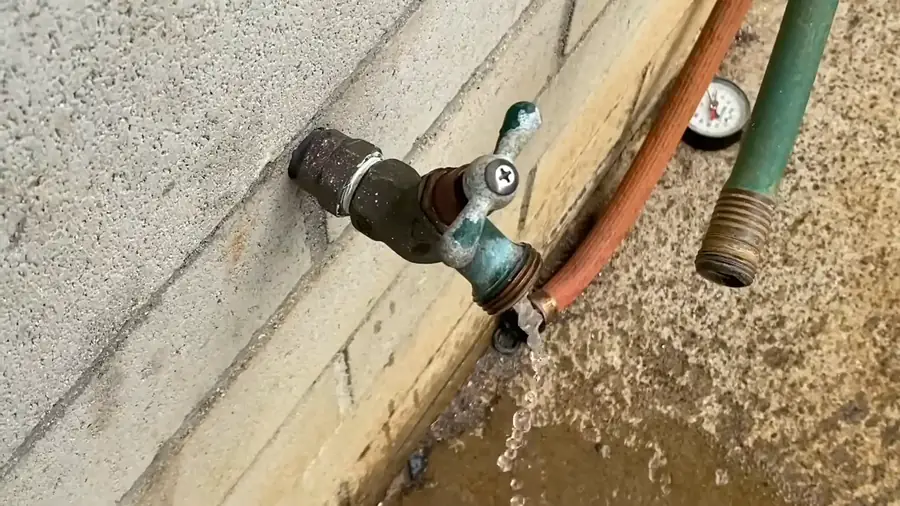
The pressure regulator valve at your house water entry reduces incoming supply pressure to a residential-safe range. Parker Water and Sanitation District delivers water at 80 to 120 PSI in most Parker zones because the system has to push uphill to elevations near 6,000 feet. Residential plumbing fixtures, appliances, and pipes need pressure under 80 PSI to operate safely; the PRV does the reduction.
PRV failures show up two ways. The valve body itself can leak from the diaphragm or seal failure, which produces visible water at the device. More commonly, the PRV stops regulating but keeps water flowing, which exposes downstream plumbing to full supply pressure. Over-pressure damages water heater T&P valves, toilet fill valves, washing machine hoses, and dishwasher seals. The first sign is often a T&P valve discharge or a sudden burst hose on a washer; the underlying cause is the PRV. Call (303) 552-3896 for dispatch.
How We Detect Pressure Regulator Valve Leak Detection and Repair in Parker, CO
PRV diagnostic runs in two parts: pressure measurement and visual inspection.
Pressure measurement uses a gauge at an outdoor hose bib or laundry connection to read static house pressure with no flow. Healthy systems read 50 to 75 PSI. Readings under 40 PSI indicate either a failed PRV stuck in restricted position or a supply line problem. Readings over 80 PSI indicate the PRV has failed and is no longer regulating; this is the more dangerous failure mode.
PRV body inspection looks at the valve at the supply entry for water staining, active drips, or corrosion. The PRV body uses an internal diaphragm that fails over 10 to 18 years and can produce a slow seep. Spring rebar reinforcement of the body shell sometimes corrodes externally and weeps along that line.
Downstream symptom check looks for evidence of over-pressure damage elsewhere in the system. T&P valve drip at the water heater, leaking toilet fill valves on multiple toilets, or burst washing machine hoses all point at upstream over-pressure from a failed PRV.
Adjustment test on PRVs with intact bodies but incorrect pressure attempts adjustment to the proper setting. The PRV typically has a top adjustment screw; clockwise raises pressure, counterclockwise lowers. PRVs that respond properly to adjustment usually have years of remaining service life. PRVs that do not respond have lost diaphragm function and need replacement.
Repair or replace decision in Parker, CO
PRV repair is mostly replacement work. Internal rebuild kits exist but rarely justify the labor cost over a new valve.
Full PRV replacement on failed valves swaps the entire body with a new unit. Modern Watts, Wilkins, or Apollo PRVs install in the same fitting position as the original in most cases. Cost runs $350 to $750 installed depending on access and valve size. Half-inch valves serve smaller homes; 3/4-inch is standard for most Parker residential; 1-inch and larger for high-flow applications.
PRV addition for homes without an existing PRV is common in older Parker stock. Pre-1980 Mainstreet and Downtown Parker homes sometimes lack original PRVs. Code now requires PRV installation when house pressure exceeds 80 PSI. Cost $400 to $850 installed including any needed fitting work at the main supply entry.
Pressure gauge installation as a permanent monitor at the PRV or nearby supply point lets the homeowner track pressure over time. Cost $80 to $180. Useful preventive measure on systems past PRV replacement age.
Downstream damage repair when PRV failure has damaged water heater T&P valve, toilet fill valves, or appliance hoses. Each affected component gets addressed separately; the PRV fix is the root cause but downstream damage continues until each affected component is repaired or replaced. The PRV repair plus T&P valve replacement plus expansion tank install is a common combined scope.
Why Parker pressure runs high
Parker Water and Sanitation District pumps water from the Rueter-Hess Reservoir treatment plant uphill across Parker's varied elevation. The town sits between roughly 5,800 and 6,200 feet, and PWSD has to maintain pressure at the highest service points, which means lower-elevation neighborhoods receive water at significantly higher pressure than they need. Static delivery pressure ranges from 80 PSI in central Parker to 120 PSI in some lower-elevation pockets.
Master-planned cohorts (Stonegate, Stroh Ranch, Idyllwilde, Cottonwood Parker, Canterberry Crossing, Bradbury Ranch, Lincoln Creek) all have PRVs as code-required installation at the house entry. Most original-construction PRVs are now in the 15-to-30-year window, which is past expected diaphragm service life. PRV replacement work is a routine call in these cohorts.
Pre-1980 Mainstreet and Downtown Parker homes sometimes lack PRVs entirely because the original construction predated the code requirement. House pressure in these homes can read past 100 PSI continuously, which accelerates wear on every fixture, every pipe joint, and every appliance hose. PRV addition is a strong preventive measure on these older homes.
The Pinery and Pine Lane Estates owners on private wells typically run their own pressure tanks and pressure switches, which create different diagnostic considerations than PWSD-served homes. PRVs are less common on well-served properties because the well pump system already regulates pressure delivery.
PRV repair $350 to $850.
Diagnosis $100 to $200 including pressure measurement. Full PRV replacement $350 to $750 installed. PRV addition on older homes without one $400 to $850. Permanent pressure gauge install $80 to $180. Downstream damage repairs (T&P valve, expansion tank, fixture valves) priced separately by component.
Water hammer or T&P valve dripping?
Pressure-tested diagnostic. Over-pressure causes far more damage than the PRV repair itself.
☎ (303) 552-3896PRV questions Parker calls in with
What pressure should my house plumbing be?
Standard residential range is 50 to 75 PSI static pressure with no flow. Pressure under 40 PSI feels weak at fixtures and may indicate a supply restriction. Pressure over 80 PSI exceeds the rating of most appliance hoses, T&P valves, and fixture connections, which accelerates failure across the entire plumbing system. The target setting on most Parker PRVs is 60 to 70 PSI.
How long does a PRV last in Parker?
Most PRVs last 12 to 20 years on PWSD water. The internal diaphragm is the wear component; hardness, chemistry, and pressure cycling all affect its life. Homes in higher-pressure zones see faster diaphragm wear because the regulator does more work. Annual pressure check at an outdoor hose bib gauge takes 60 seconds and catches PRV decline before downstream damage occurs.
My water heater T&P valve keeps dripping. Is that the PRV?
Often yes. Excess supply pressure forces water through the T&P valve as a safety release. The T&P drip itself is the visible symptom; the upstream PRV is usually the cause. We check static pressure on every T&P call; readings over 80 PSI confirm the PRV is failing. Replacing just the T&P without addressing the PRV usually produces a repeat call within months because the new T&P will also drip under the same pressure load.
Related Leak Services in Parker, CO
Parker, CO & Douglas County Coverage
PRV density concentrates in master-planned cohorts with code-required installations. Pre-1980 homes often lack PRVs entirely.